Precise and contamination-free liquid transfer – automated and flexible for efficient laboratory workflows
Use
- Transfer of liquid sample materials
Material
- Liquid sample materials
Operating mode
- Automatic
All advantages at a glance
Precise and flexible liquid transfer
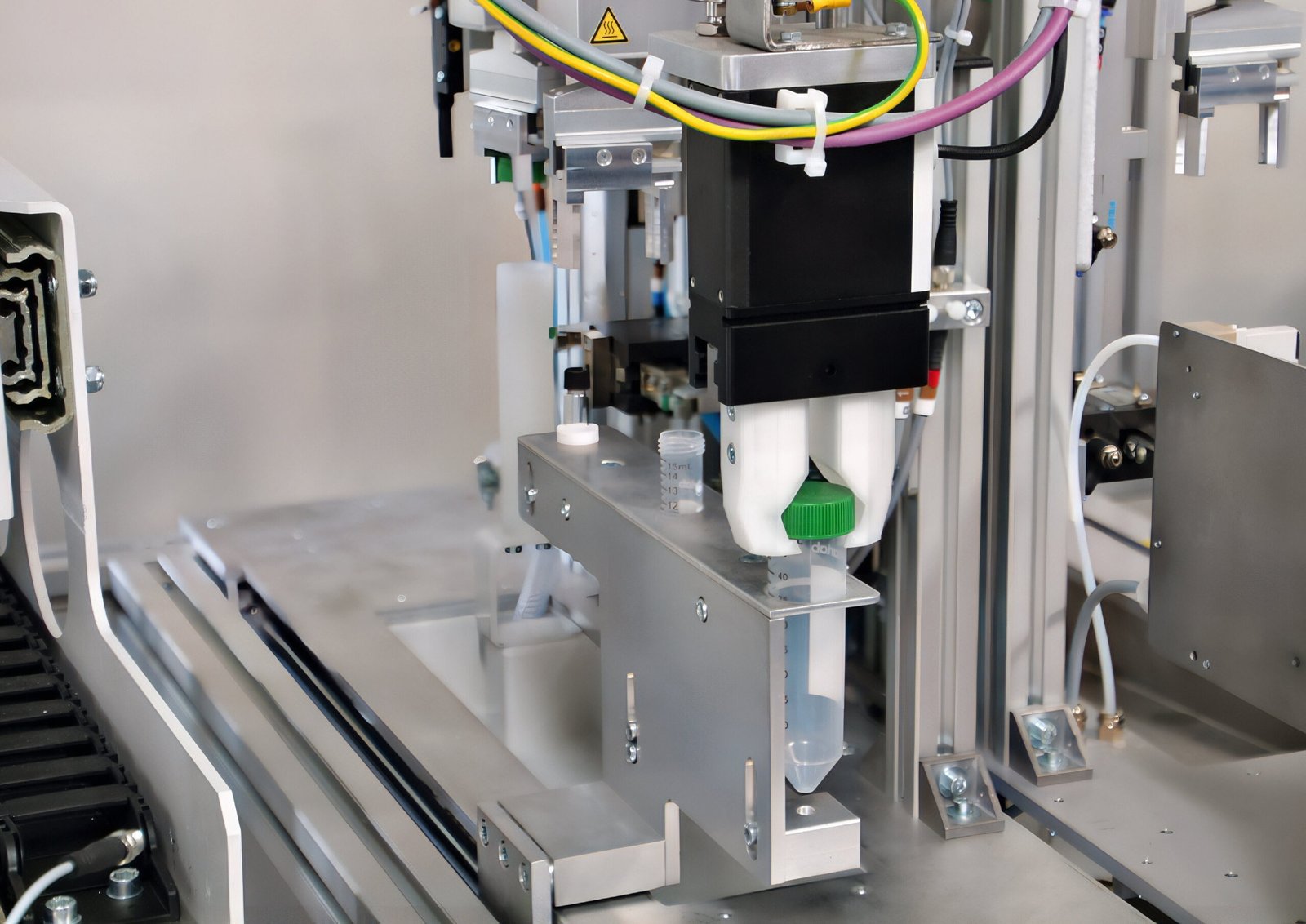
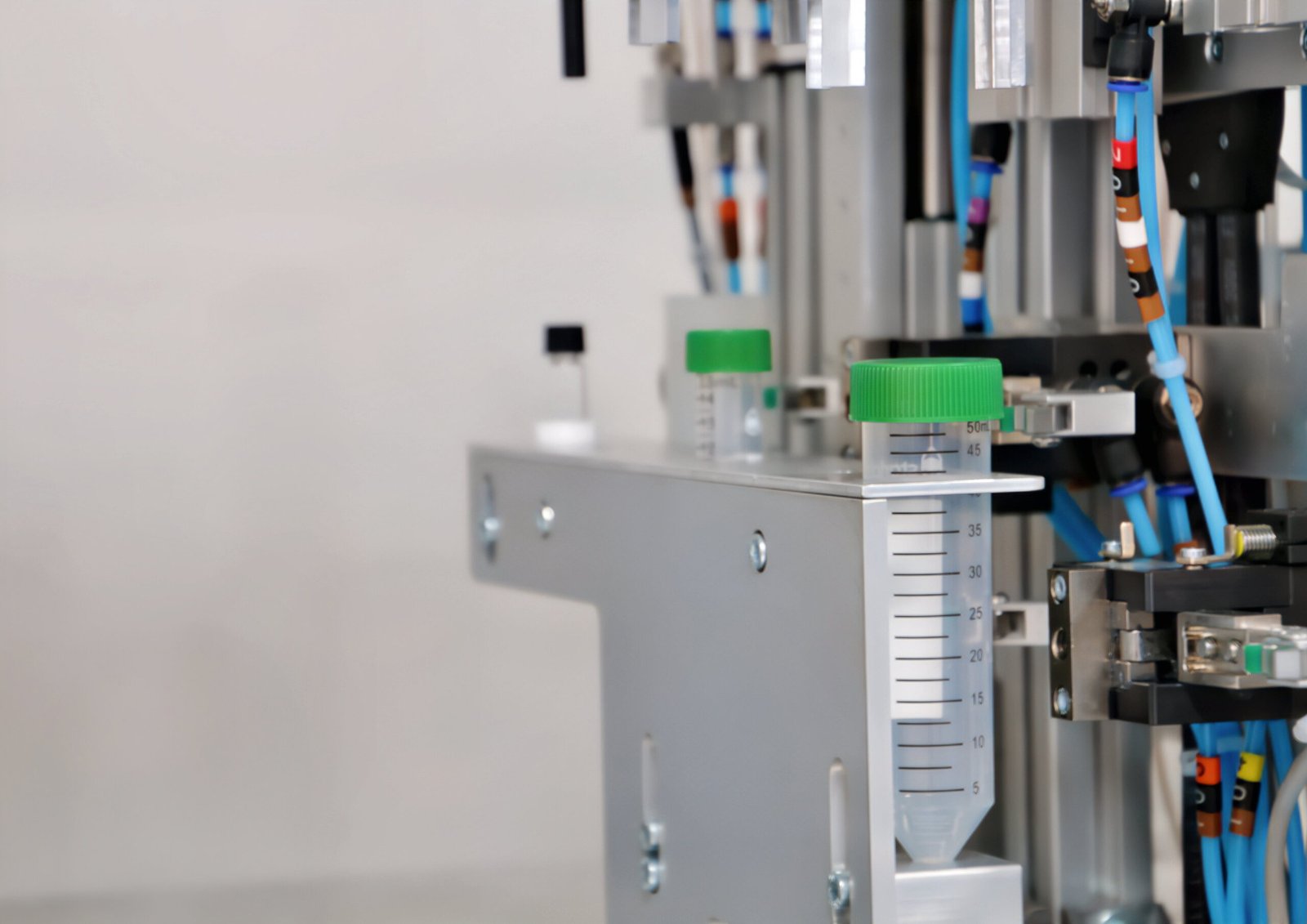
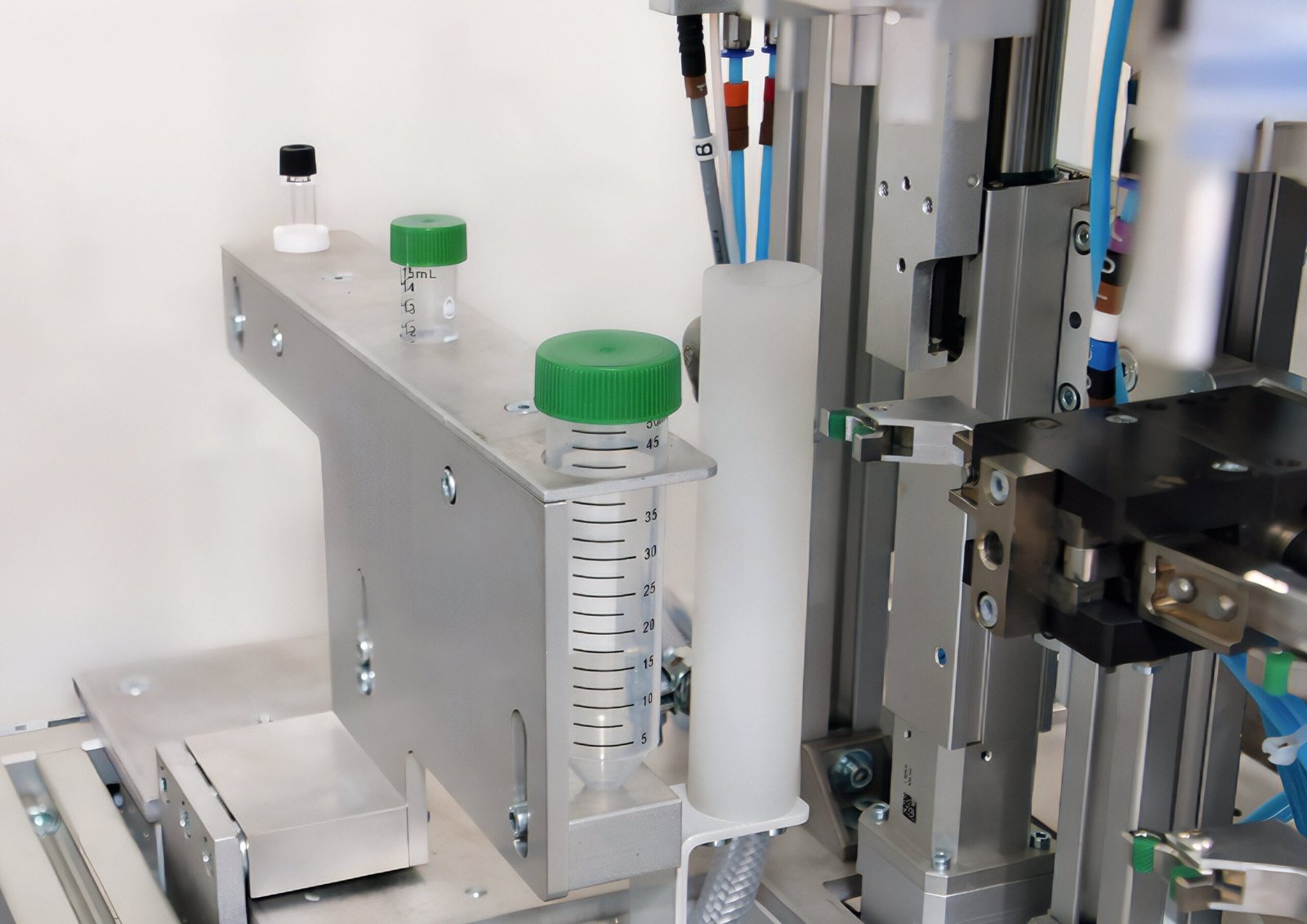
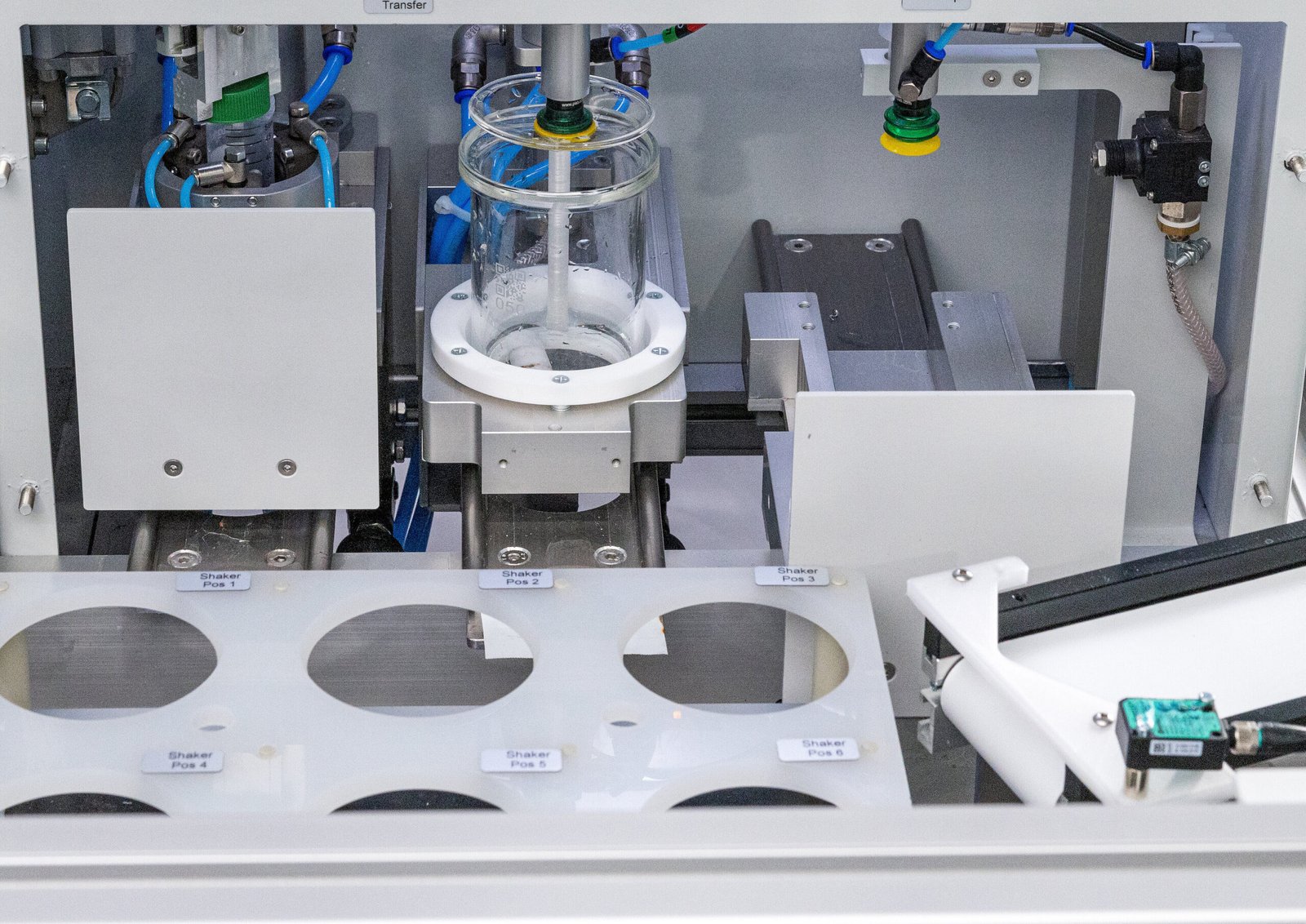
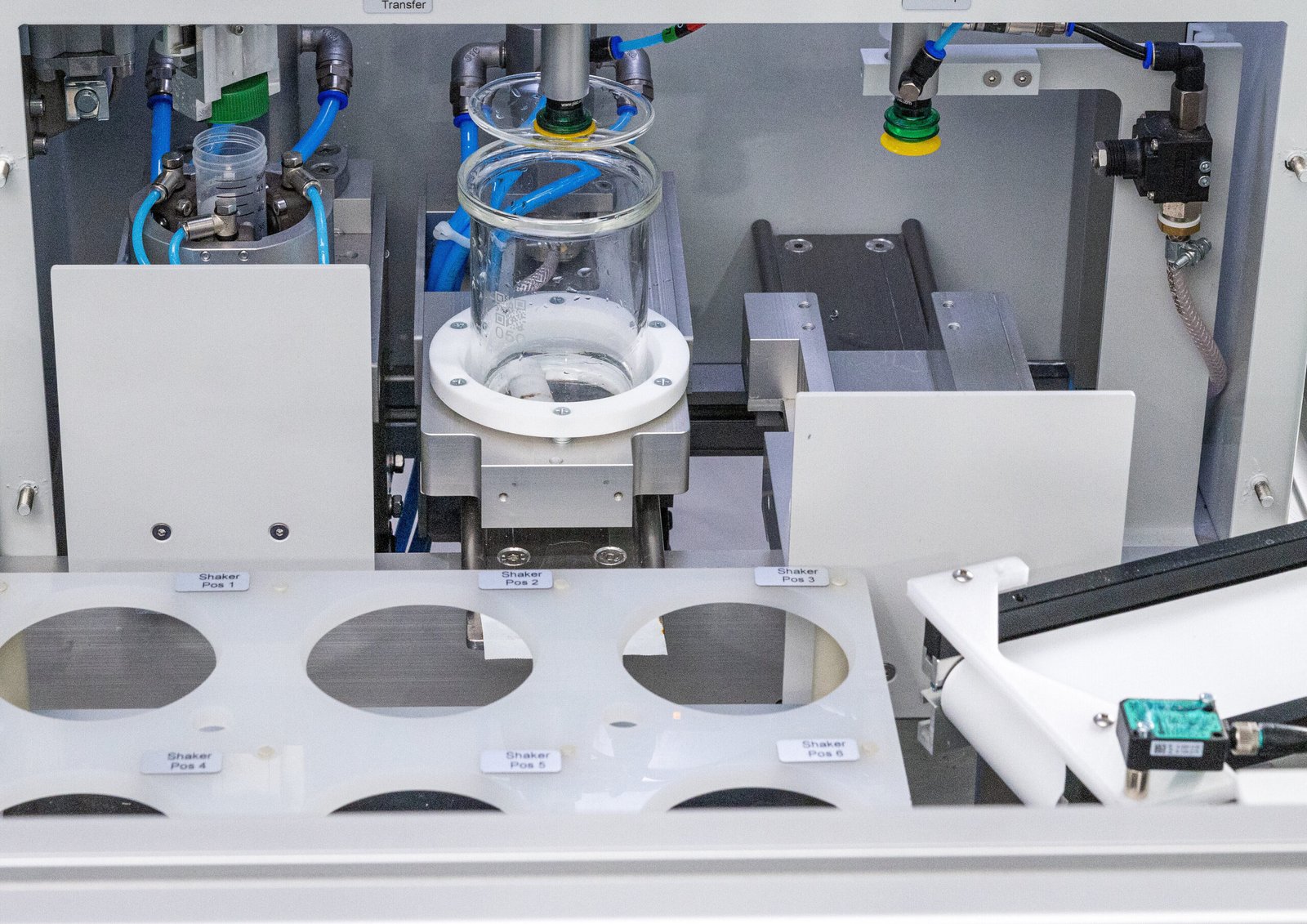
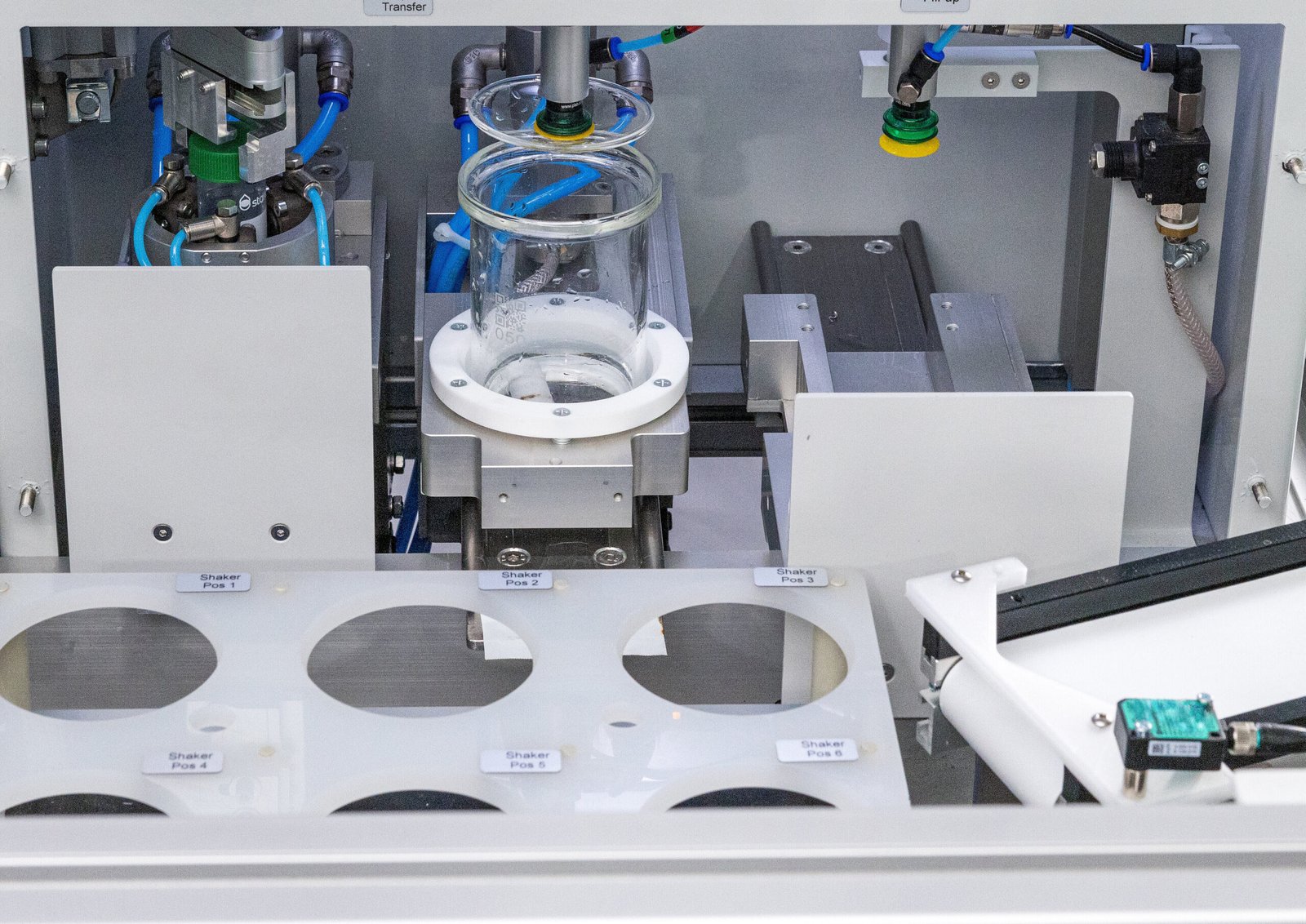
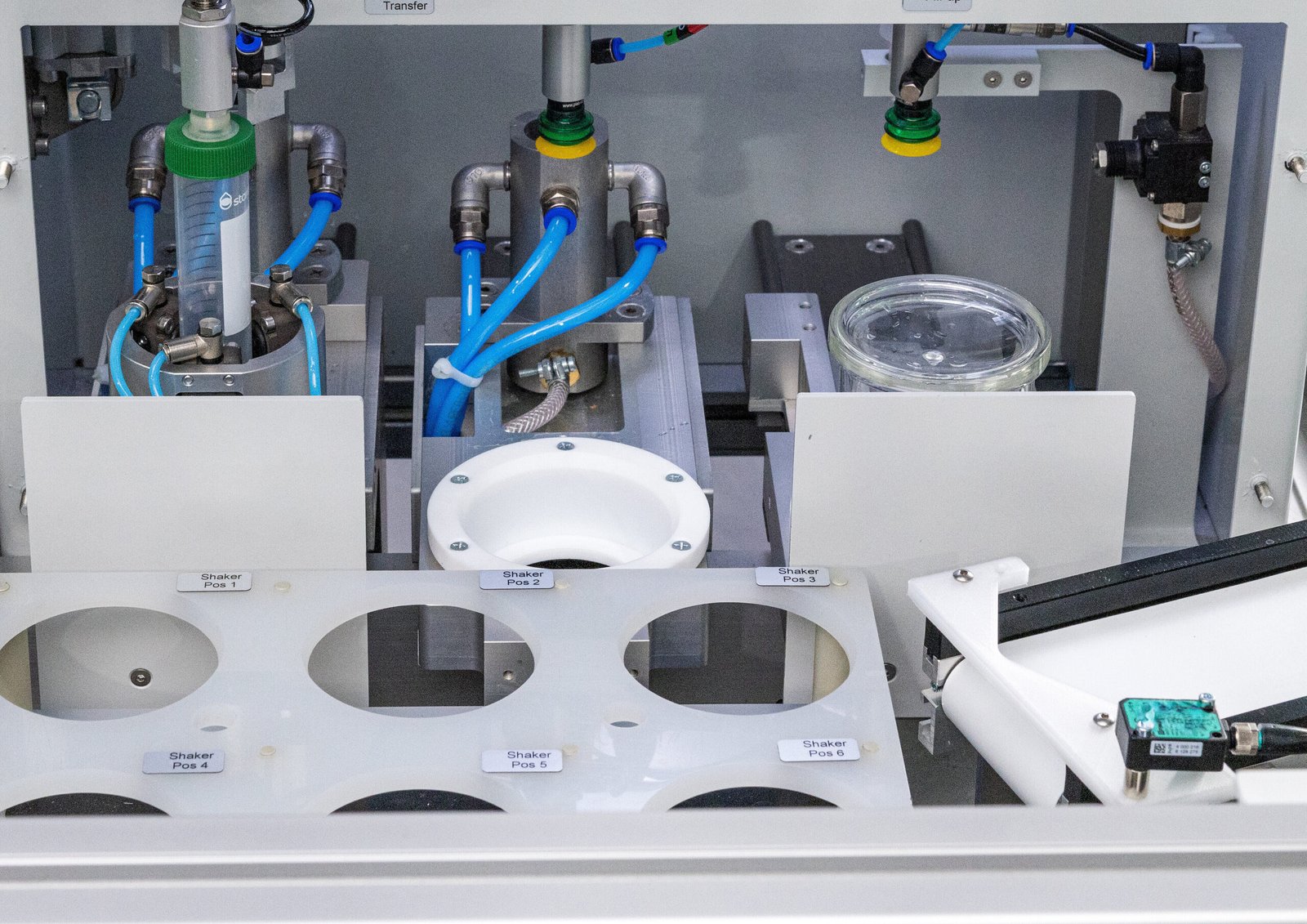
The Liquid Transfer Unit HL-TU is specially designed for precise, contamination-free transfer of liquid sample aliquots from preparation to analysis vessels. It is characterized by maximum flexibility and supports various output and target vessel types, including sample and centrifuge tubes with volumes from 15–50 ml as well as autosampler tubes (1.5–5 ml) for applications such as ICP, GC, HPLC and other analytical methods. The transfer process can be extended to up to three target vessels, enabling the execution of complex laboratory workflows.
Fully automated processes for seamless Workflows
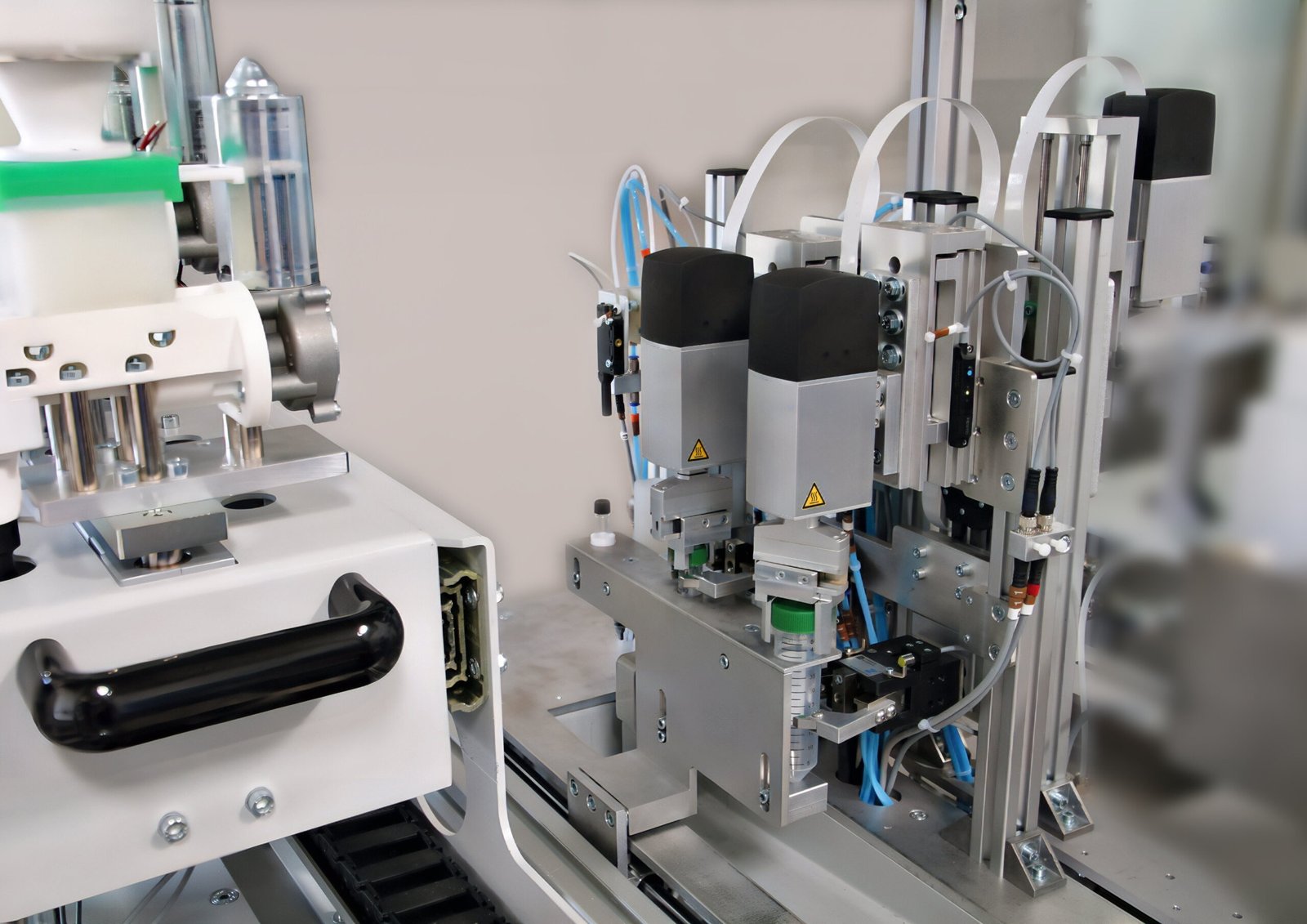
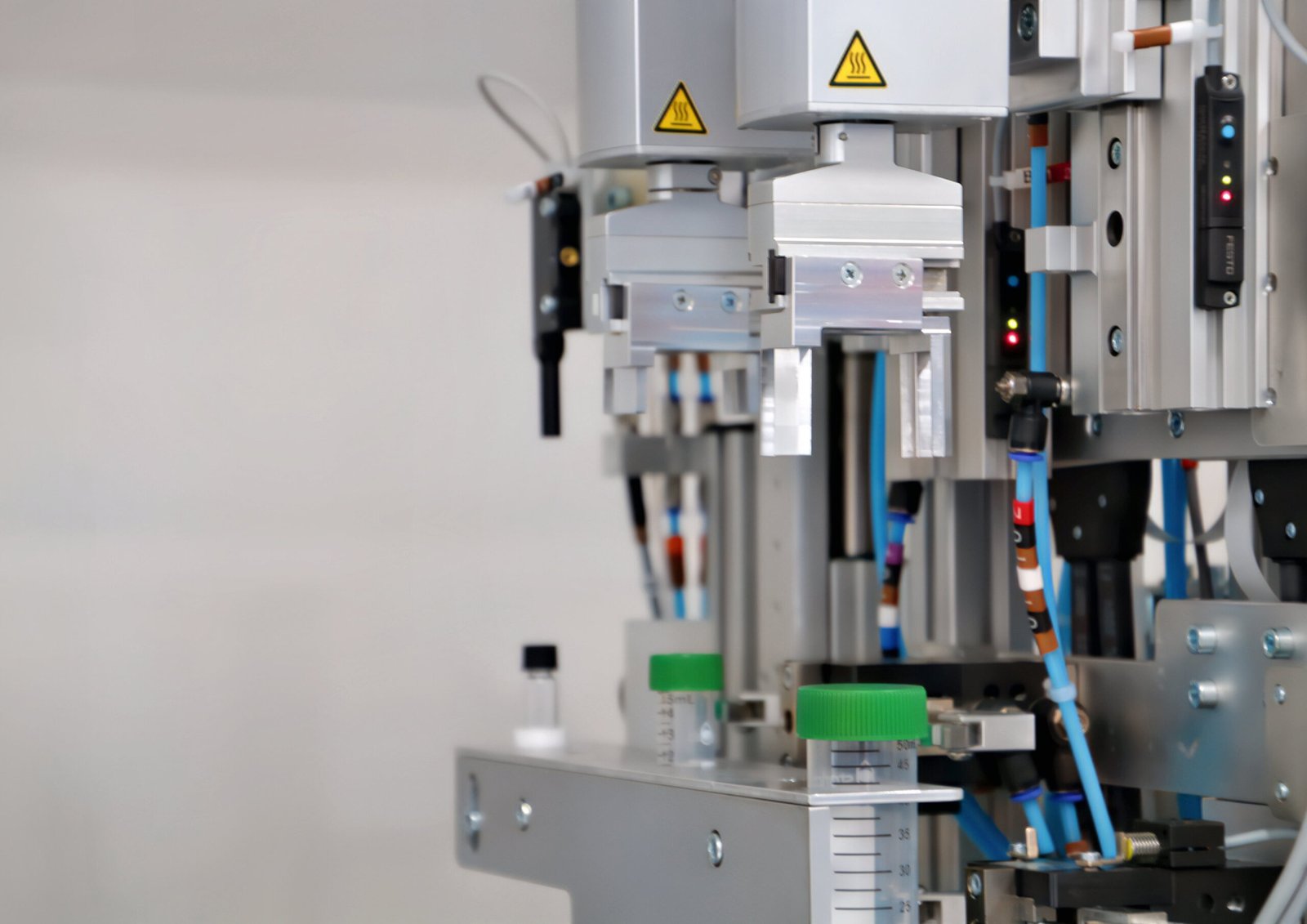
The HL-TU automates the entire transfer process, including uncapping and recapping (optional) source and target vessels, precise liquid transfer, cleaning the dispensing needle, and transferring the vessels to a handling device or subsequent analysis systems. This automation guarantees efficient and safe transfer, for example to autosampler racks or analytical instruments.
Effective contamination control
The HL-TU relies on efficient measures to avoid contamination. Typically, a syringe pump is used for liquid transfer, which ensures that the sample only comes into contact with highly pure, chemically resistant tubing. The tubing system and the outer dispensing needle are cleaned after each transfer with suitable cleaning fluids. Optionally, the tubing system can be preconditioned with the sample to minimize any residues.
Depending on the specification, a membrane pump can also be used as an alternative to the syringe pump, which also ensures low-contamination dispensing.
Precise pump technology for demanding applications
The HL-TU supports syringe volumes from 25 µl to 50 ml, making it adaptable to a wide range of applications. In addition, the resolution of the piston movement can be configured for a standard and a maximum variant. Depending on the delivery volume, a precision of up to 0.05 % can be achieved with the pump technology used.
Precise control of the dispensing needle
If solid deposits or phase boundaries play a role, the height of the needle in the z-axis can be precisely adjusted (option). This allows the needle tip to be carried along on the liquid surface. In the transfer position, an ultrasonic sensor can be used for liquid level detection.
Gravimetric monitoring for maximum accuracy
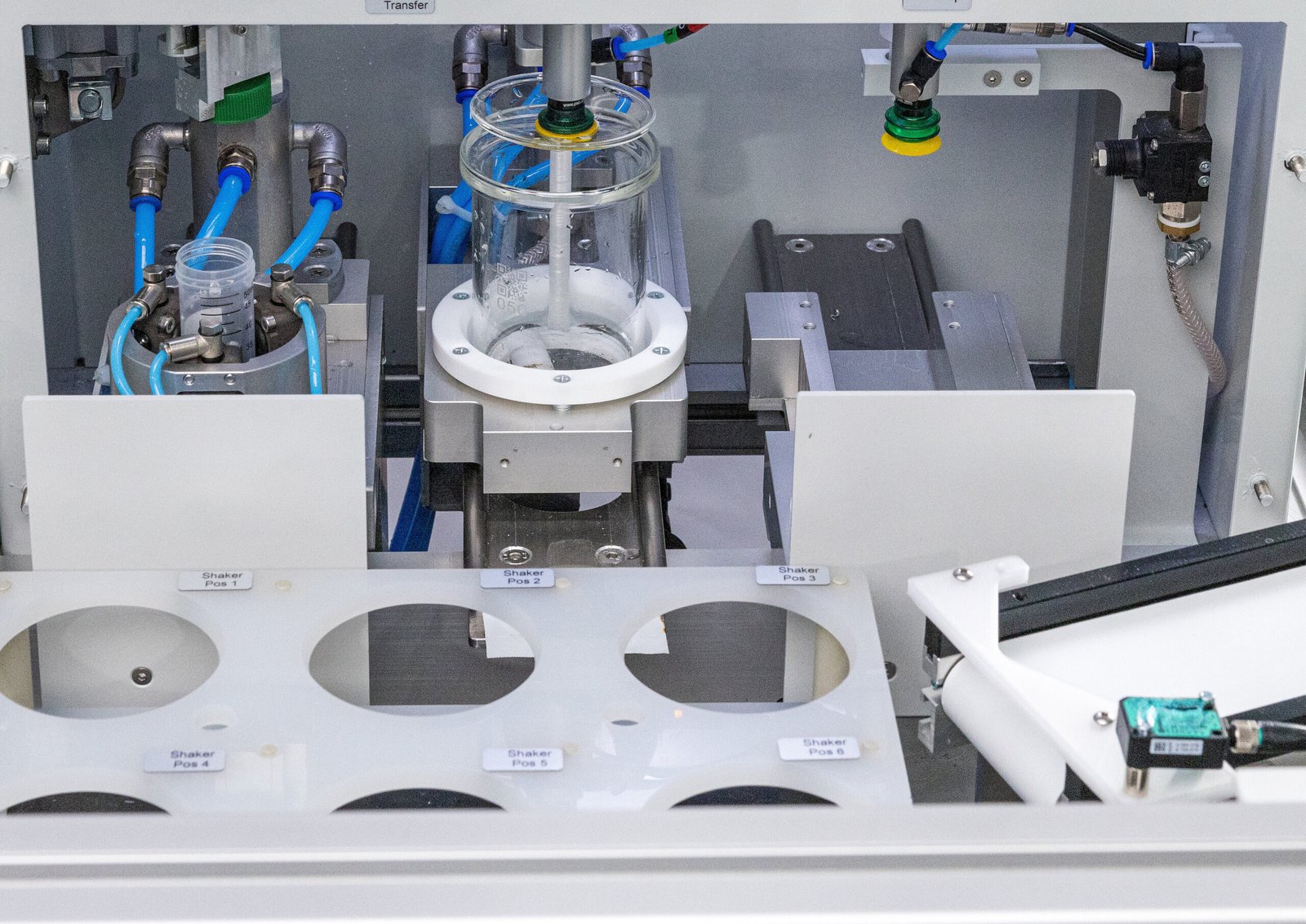
The dispensed liquid volume can be monitored gravimetrically. Depending on your requirements, precise standard scales or high-precision scales are available. The latter are specially shielded and mounted vibration-free to minimize the effects of air movement and vibration. Gravimetric control makes it possible to pass on exact sample weights to analysis systems or to calculate precise delivery quantities for sample dilution. After water dosing, the diluted sample can be weighed again to determine the actual dilution factor and store it for analysis evaluation.
Expandable functions for maximum adaptability
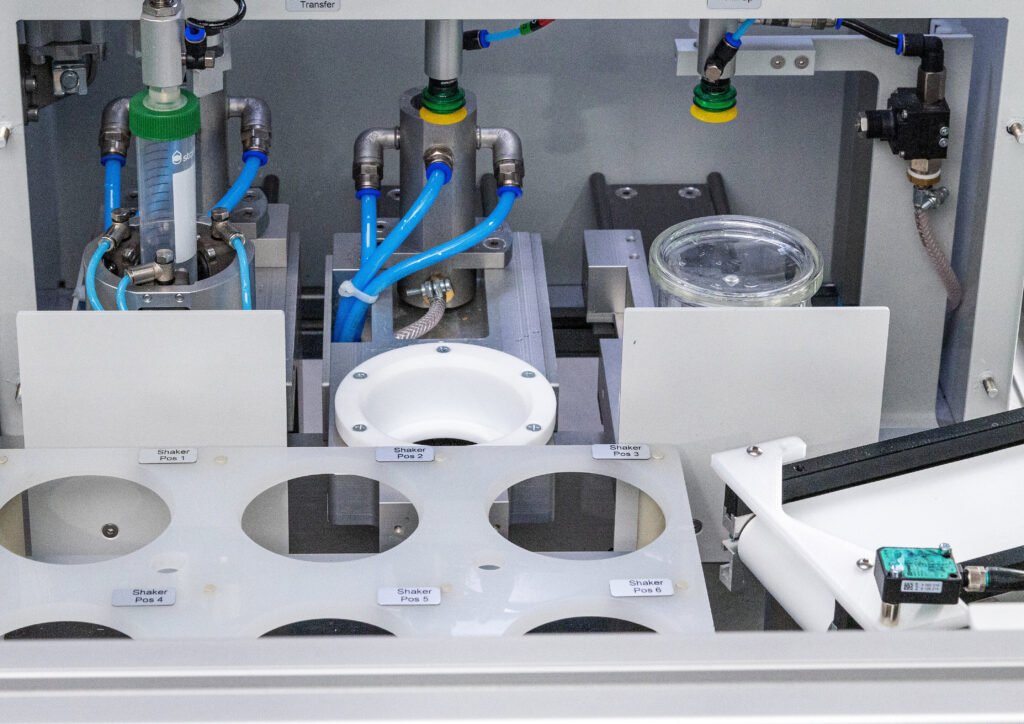
The HL-TU offers numerous upgrade options for adaptation to specific requirements. The Capping/ Decapping station HL-CU enables the handling of different vessel types and lid variants, including screw caps, watch glass lids and snap-on caps. An integrated liquid dosing station HL-DU allows direct dilutions to analytical concentrations if required.
Design options:
- Capping/ Decapping Unit HL-CU for screw caps
- Capping/ Decapping Unit HL-CU for watch glass caps
- Capping/ Decapping Unit HL-CU for snap caps
- Z-axis control of the dosing needle
- Ultrasonic sensor for liquid level detection
- Liquid Dosing Unit HL-DU
- Standard balance
- High-precision balance