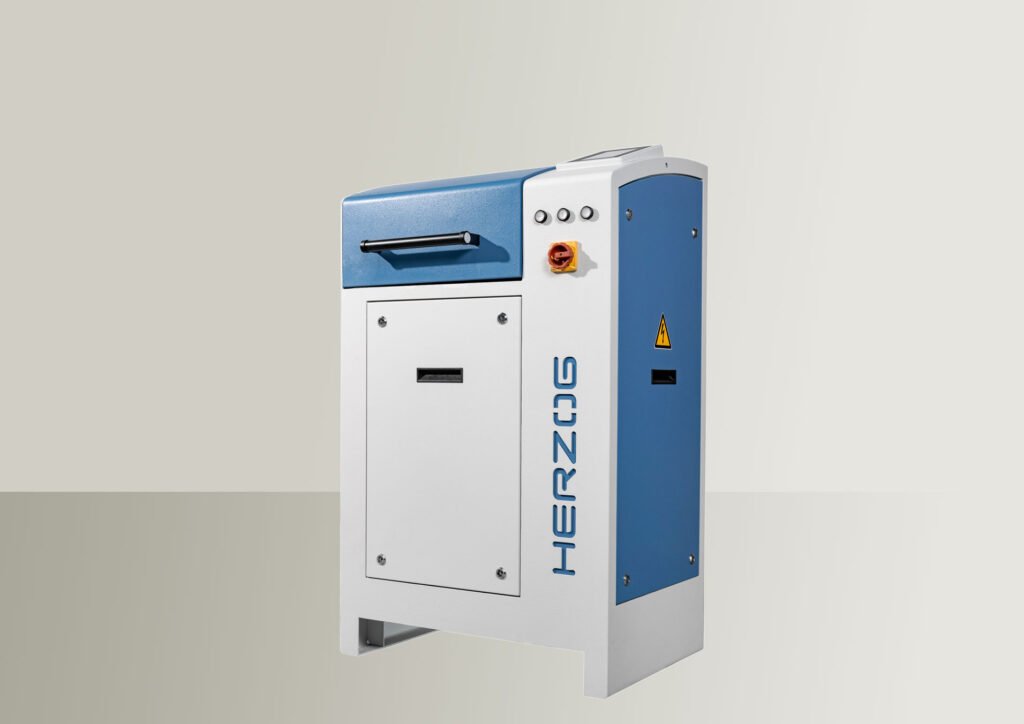
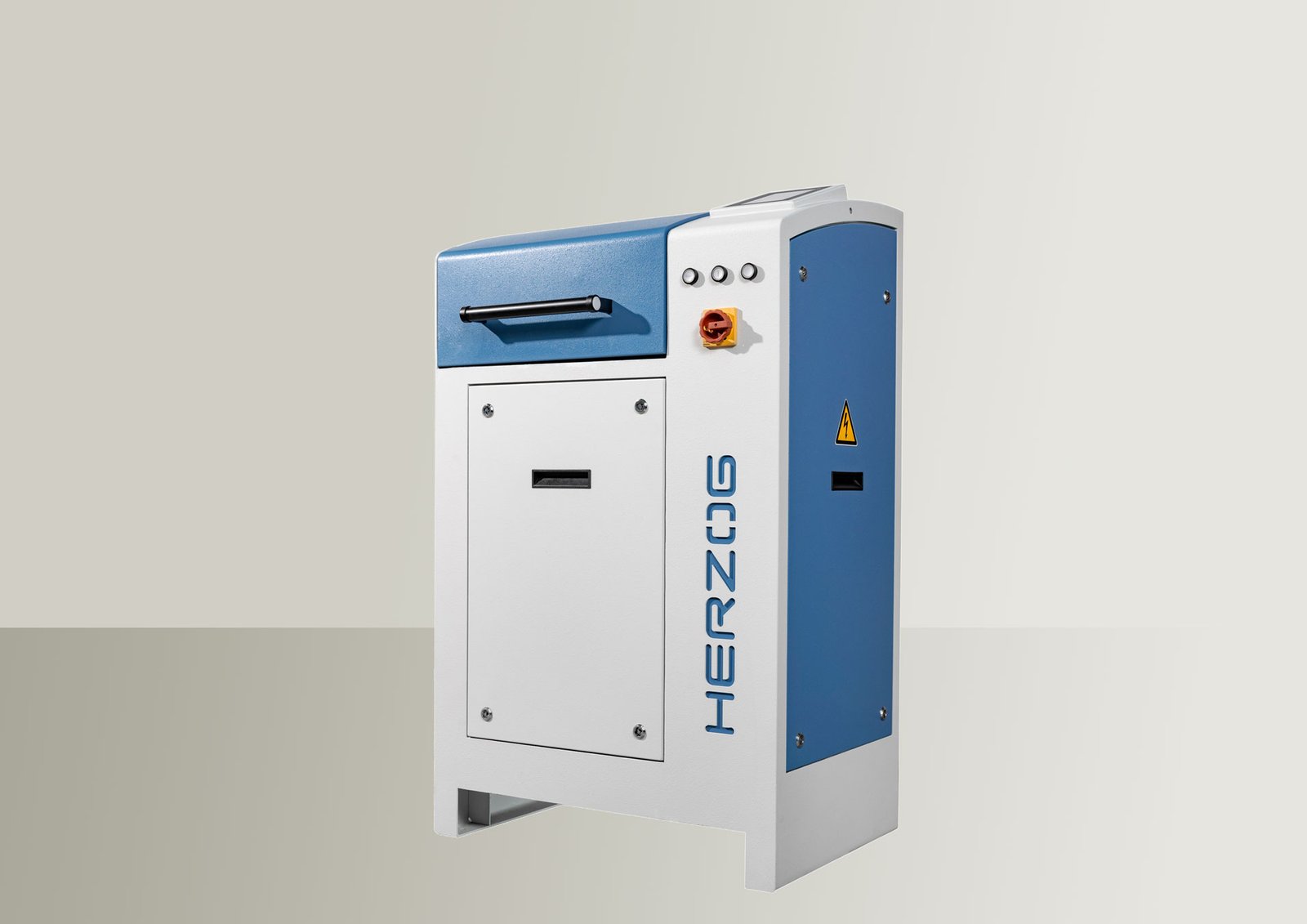
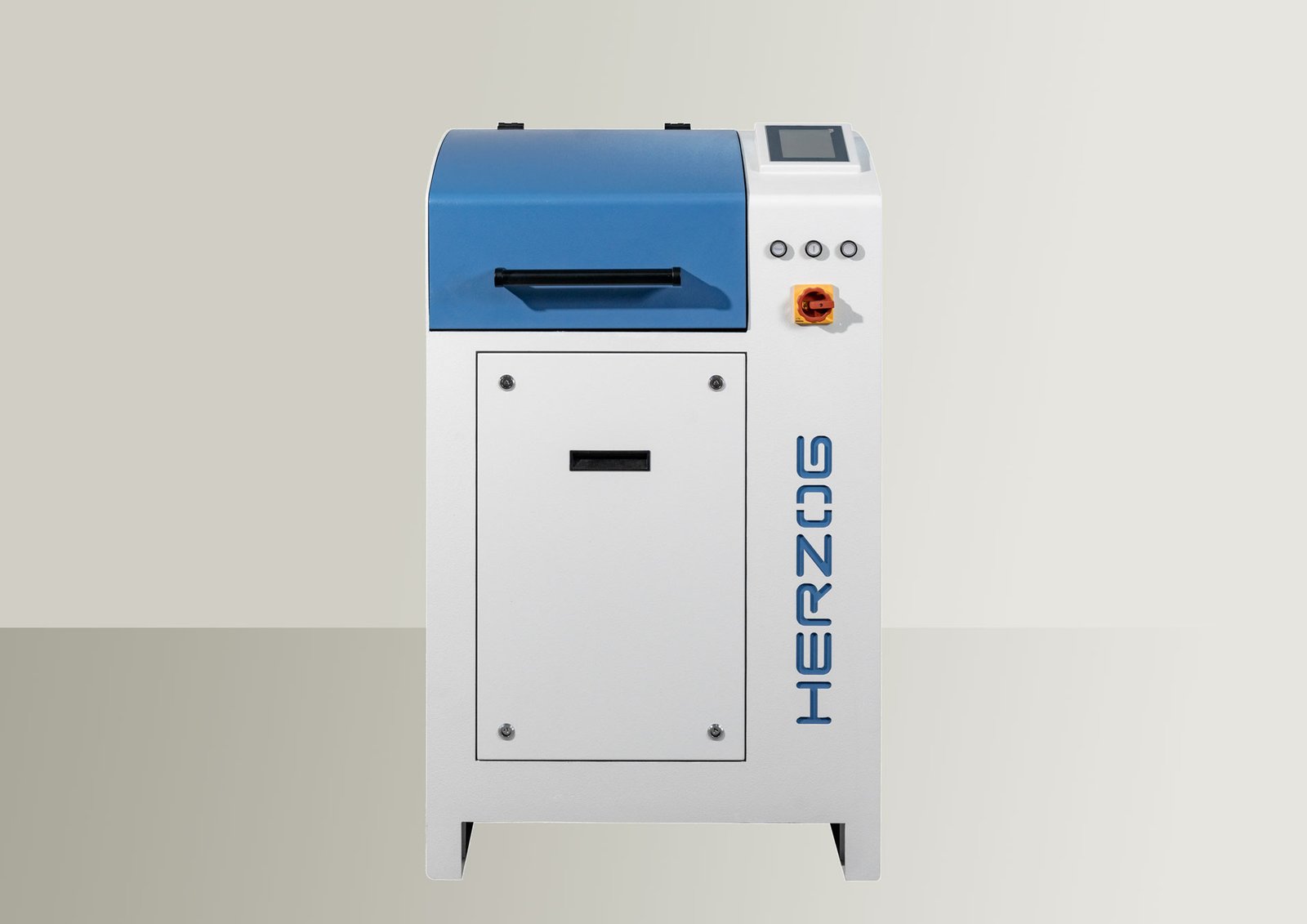
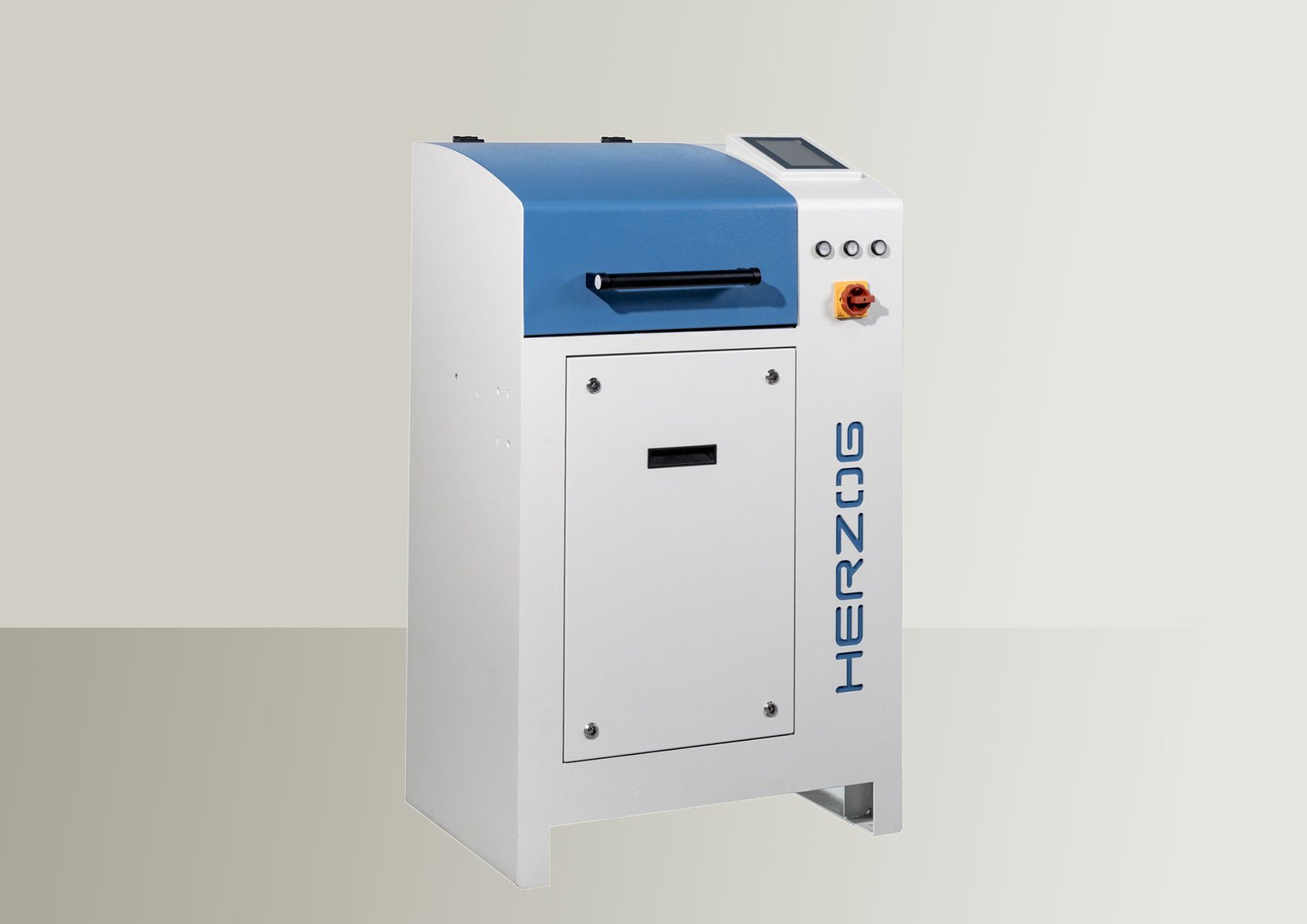
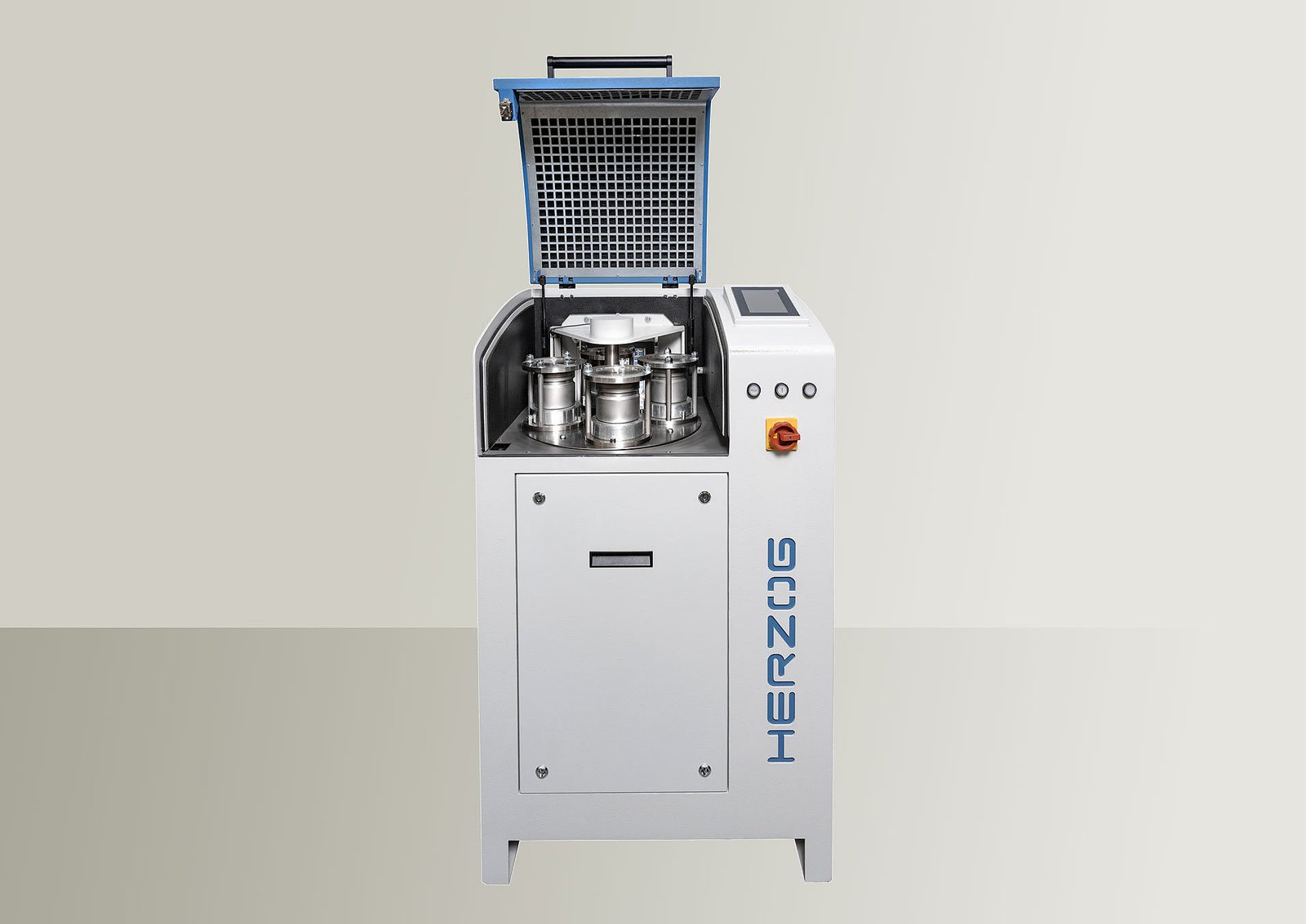
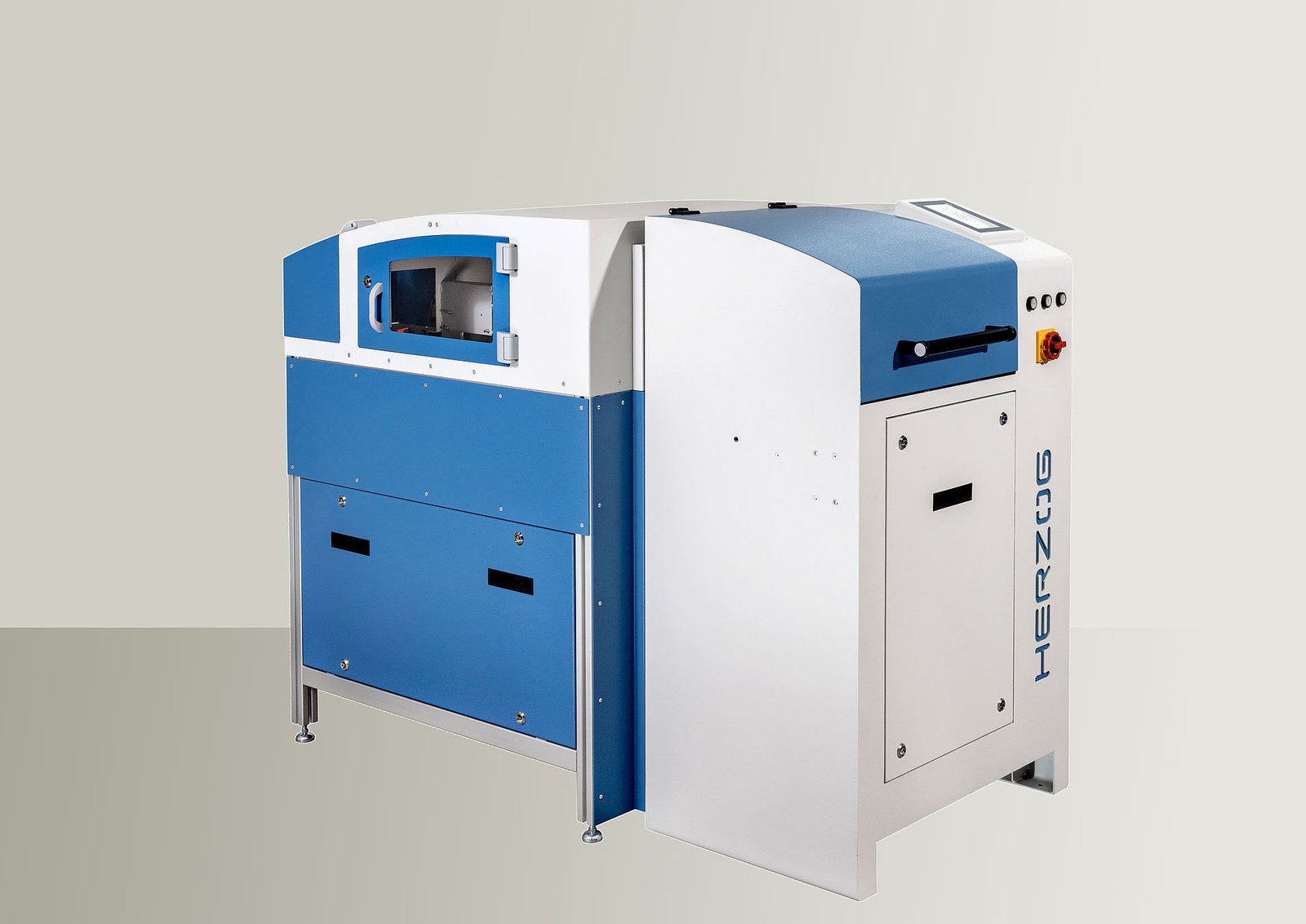
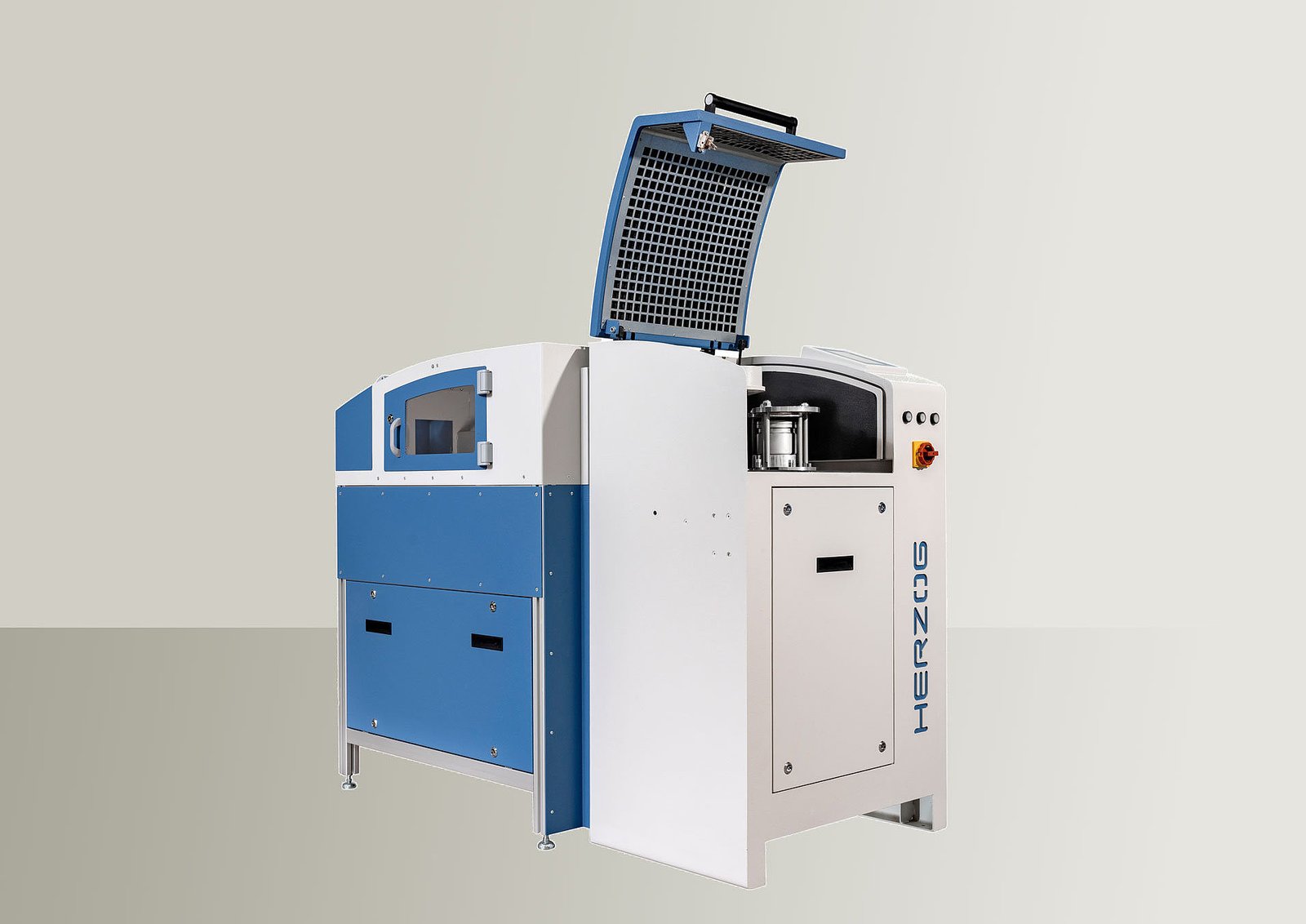
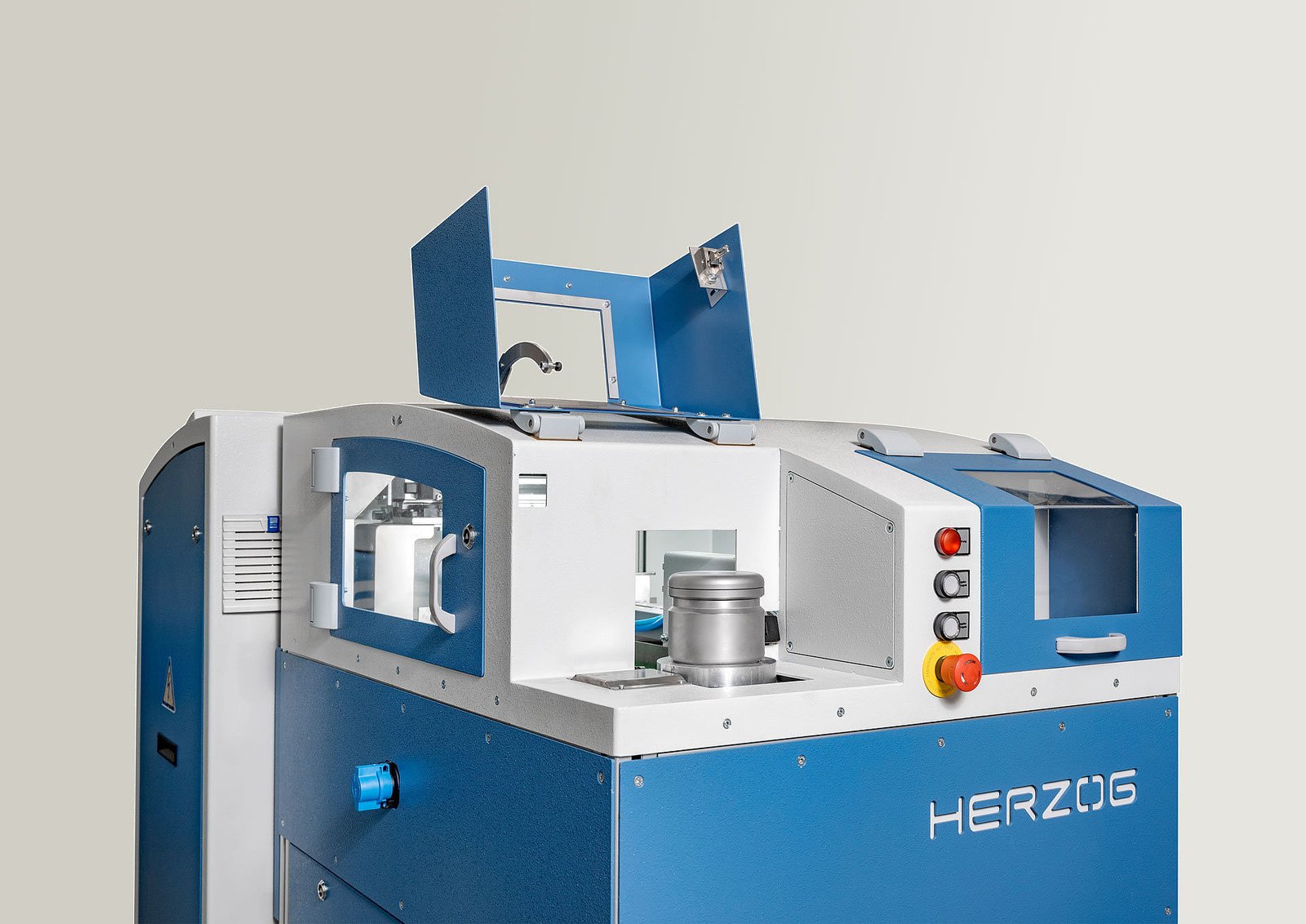
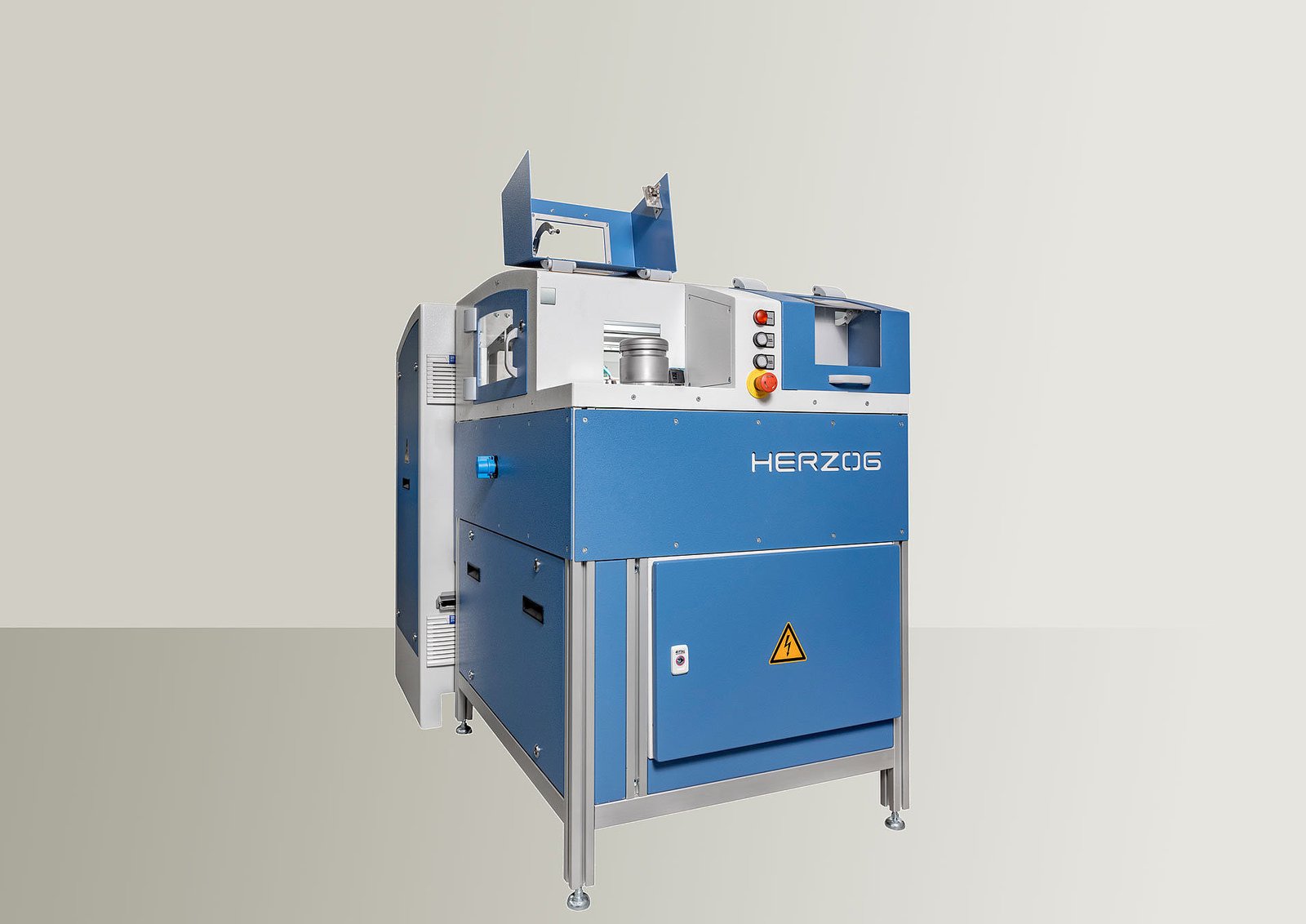
The innovative fully automatic planetary ball mill – The unique solution for highly efficient, effortless and safe sample preparation
Use
- Fine grinding of sample material for X-ray fluorescence analysis, diffractometry and other methods
Maerial
- Various soft, hard, brittle and fibrous materials (input particle size: max. 10 mm)
Operation mode
- Operation mode manual
- Automatic (integrated in automatic system)
- Magazine mode
All advantages at a glance
Automatic clamping of the grinding bowl
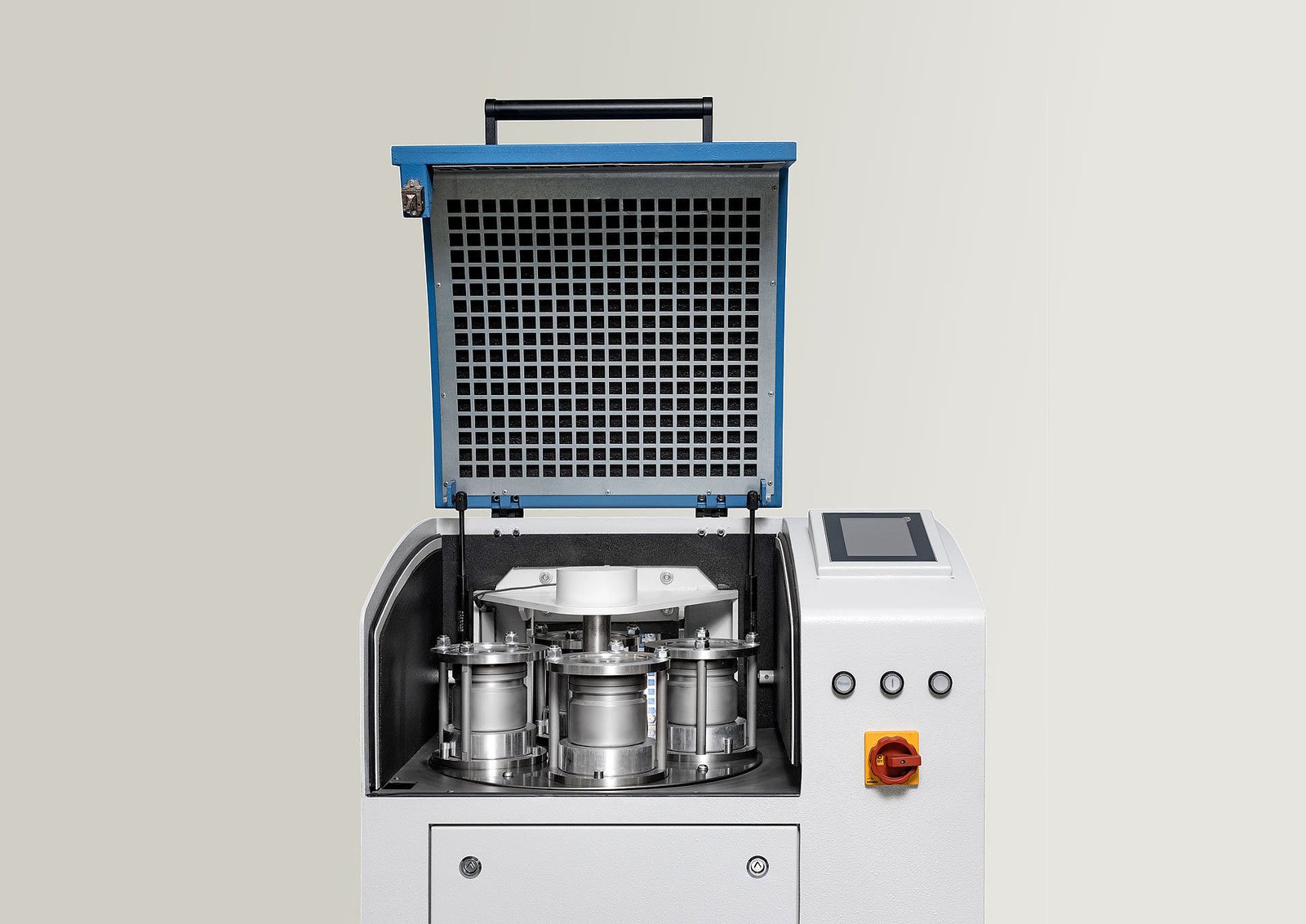
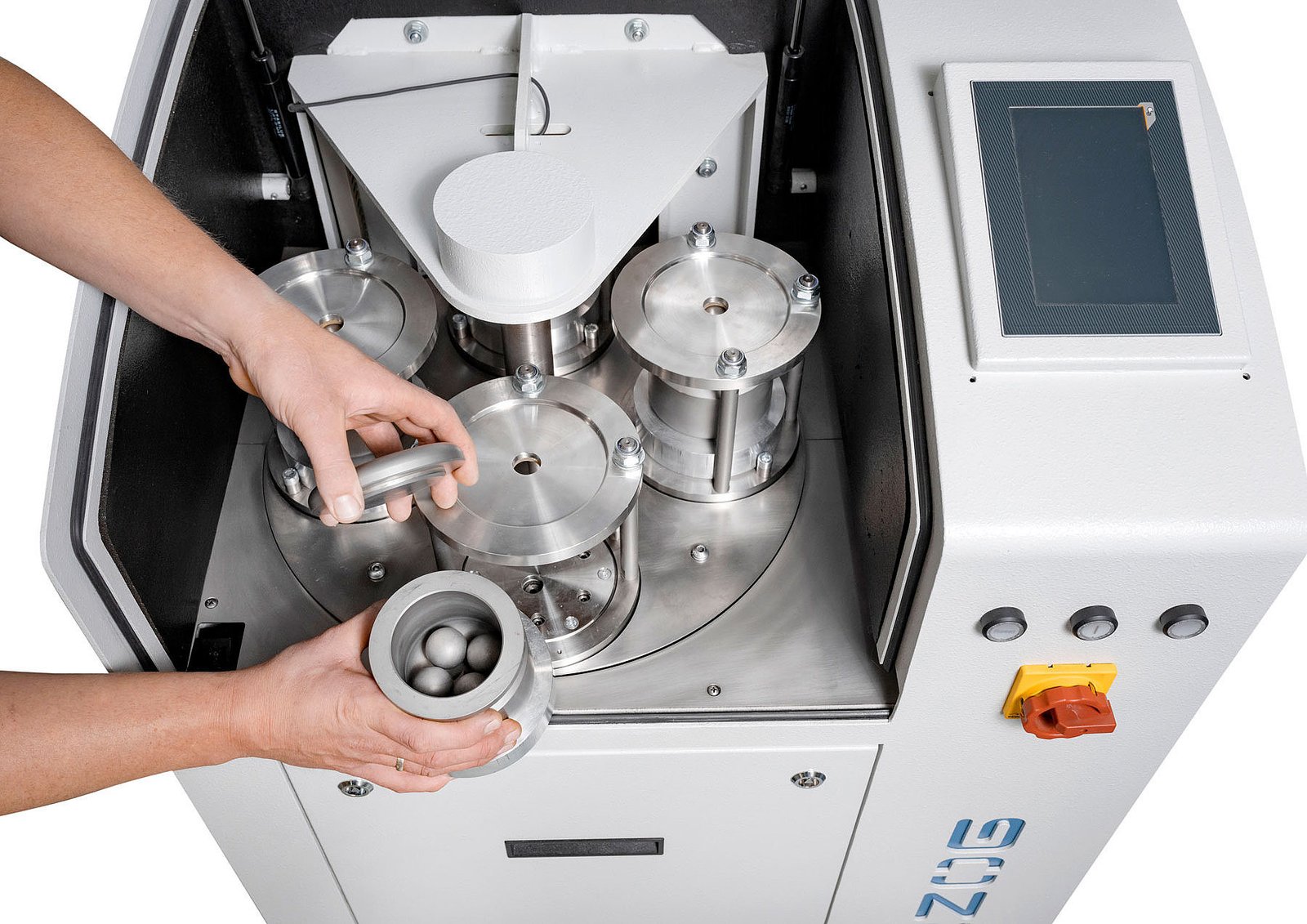
The innovative design of the HP-PKM enables fully automatic clamping and closing of grinding vessels for the first time. Each of the four grinding positions on the large sun wheel is equipped with its own hydraulic fixing system, which ensures reliable clamping of the vessel during grinding.
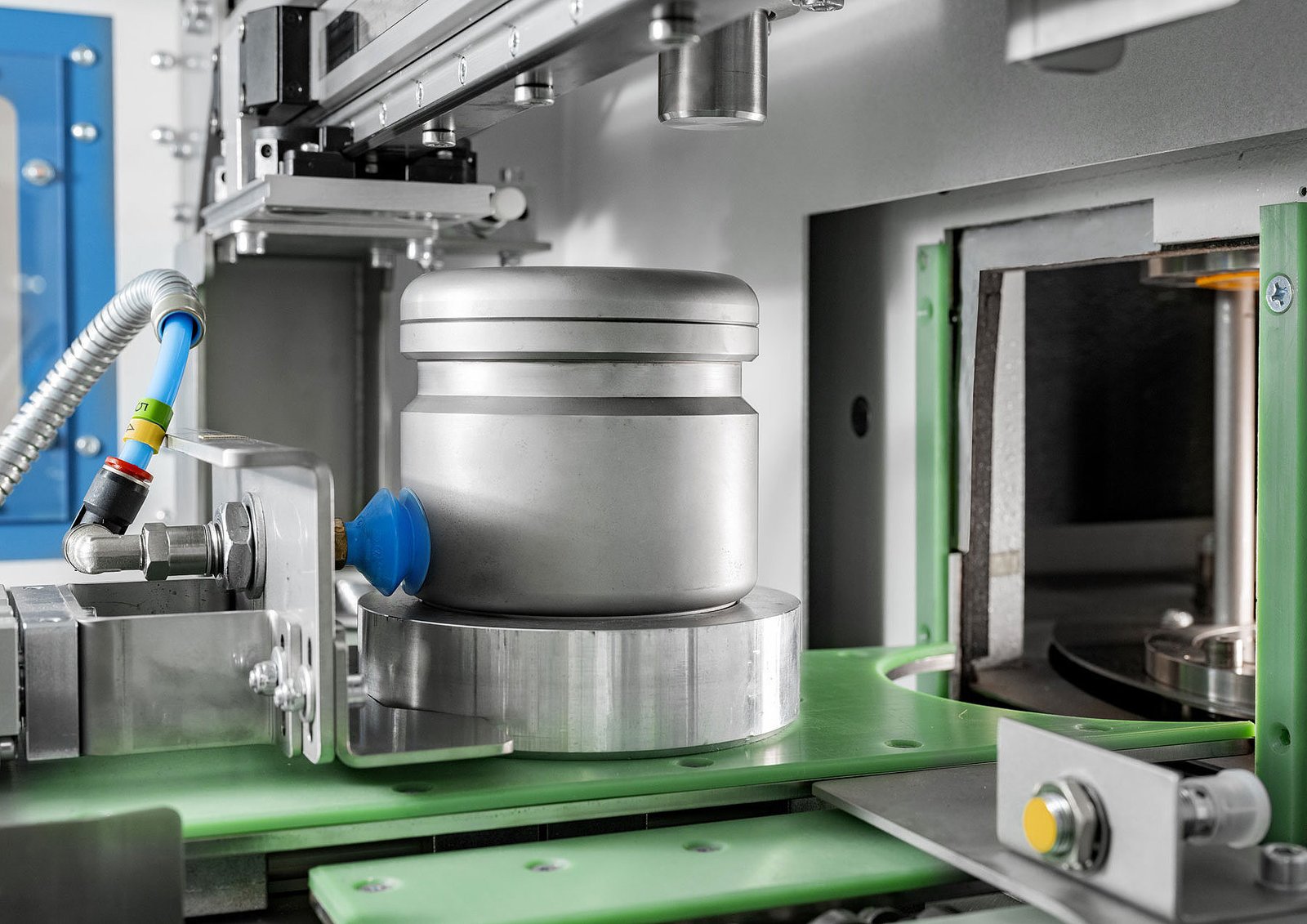
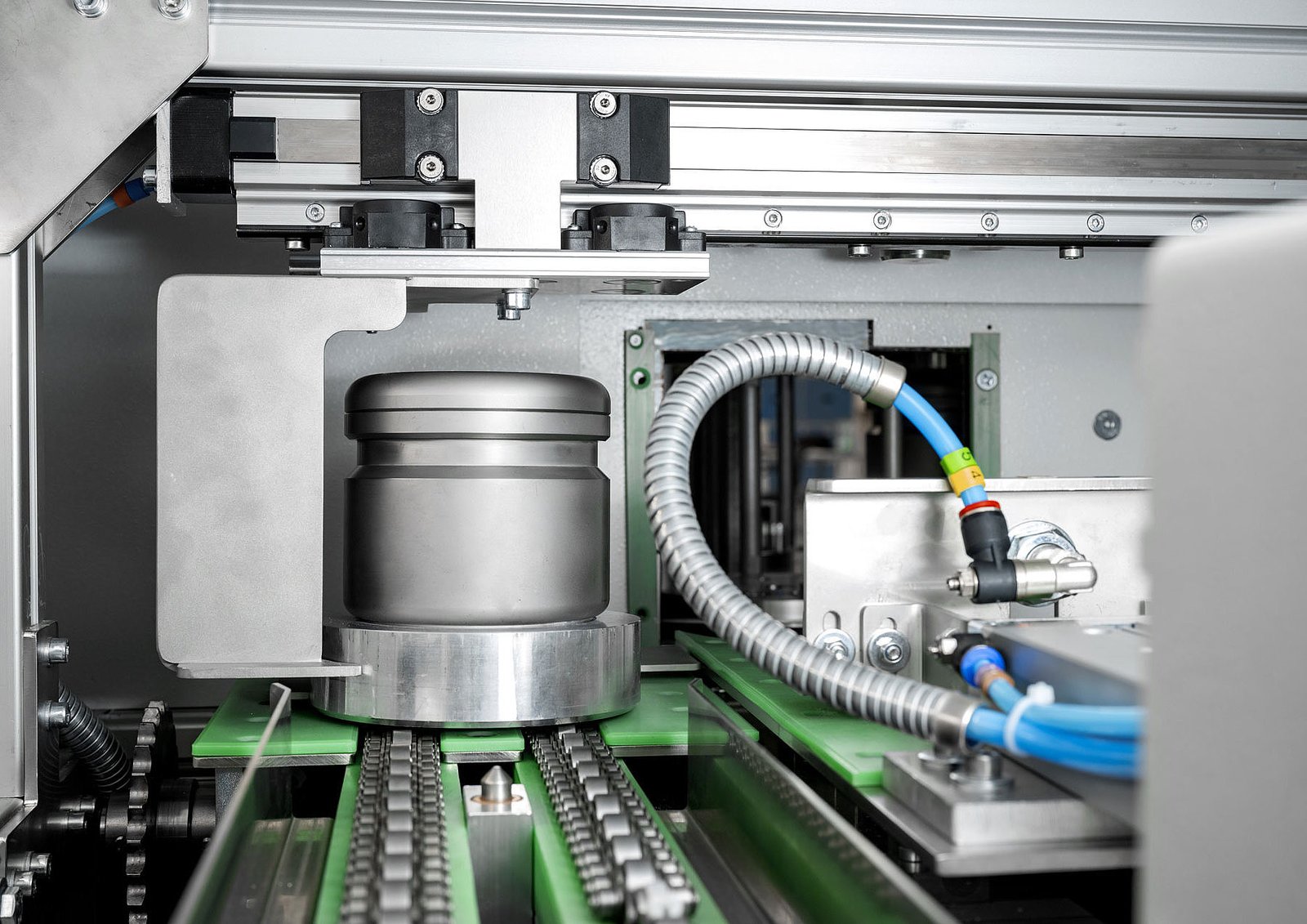
The grinding vessels can be automatically pushed into the safety cage by a handling system or inserted manually by the operator. For clamping, the vessel is automatically positioned over the clamping unit of the HP-PKM. This clamps the fixing system, which presses the grinding container hydraulically against the roof of the safety cage. This also ensures a dust-free closure of the grinding chamber and prevents the finely ground sample particles from leaking out.
Integration of the HP-PKM into automated laboratory systems
The HP-PKM has an innovative system for the automatic clamping of grinding vessels, which enables integration into fully automated laboratories. This not only relieves staff of tedious and time-consuming tasks, but also significantly increases the efficiency of the laboratory.
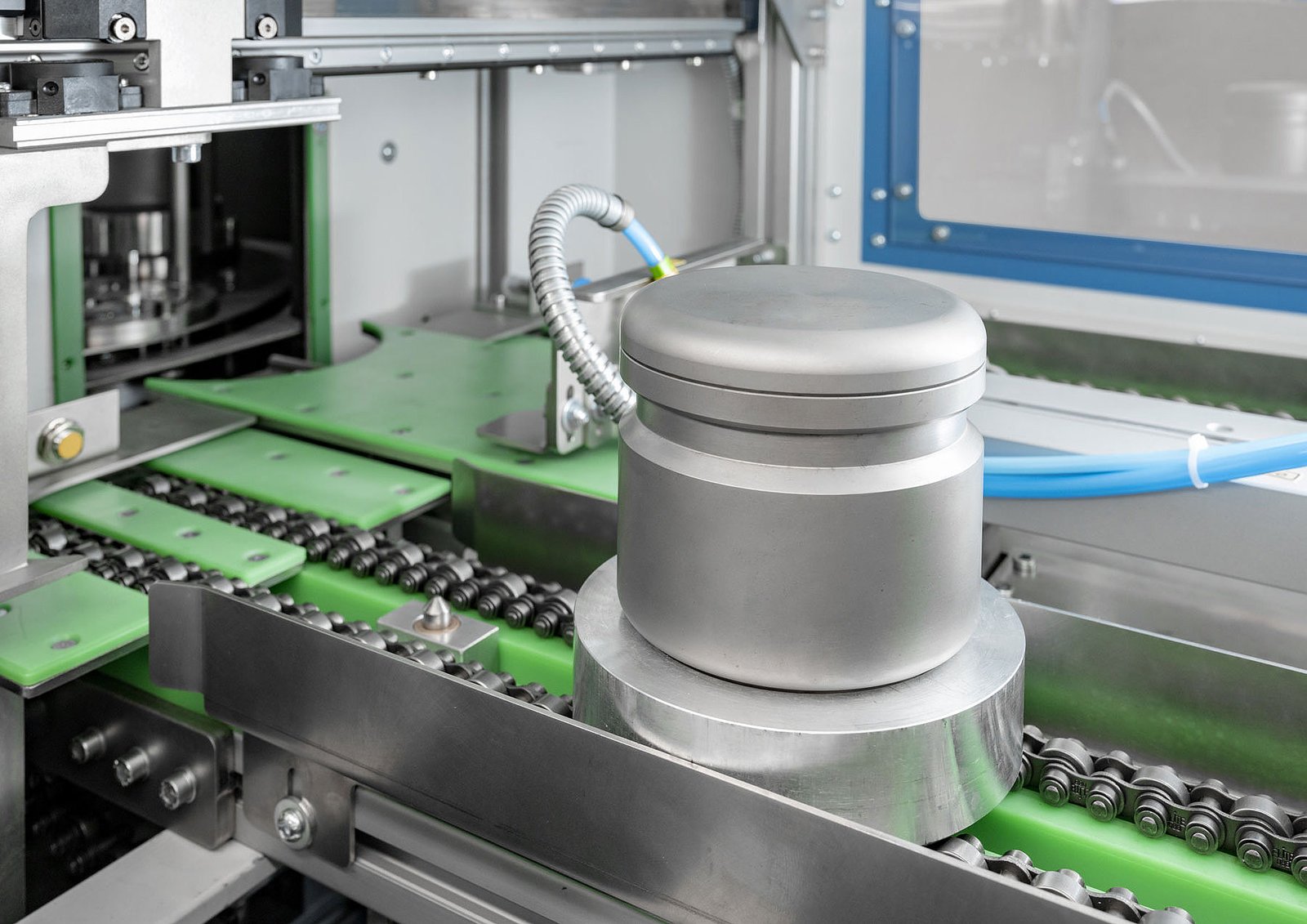
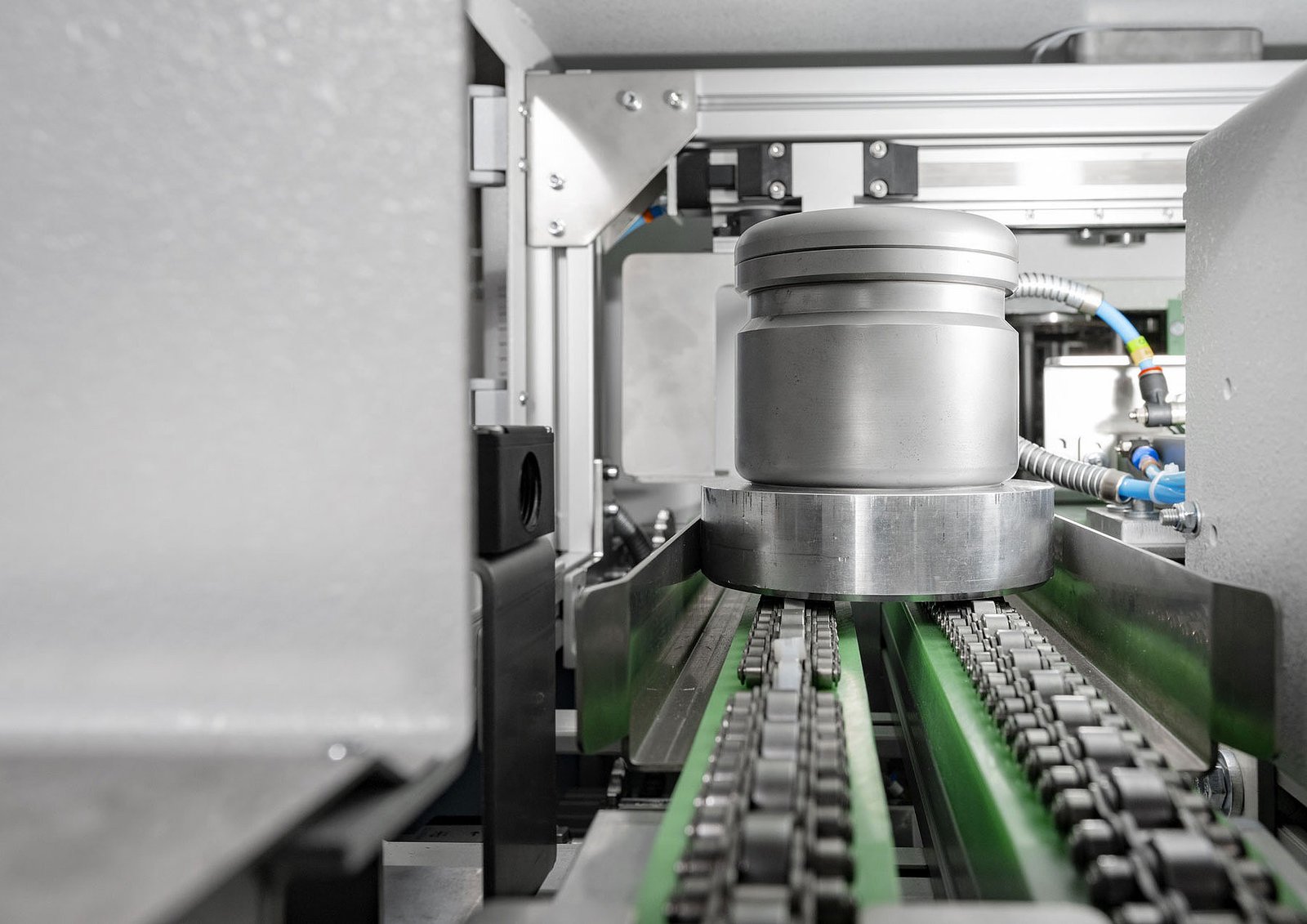
In a fully automatic system, the machine is loaded and unloaded either by a handling system connected to a conveyor system or by a multi-axis robot with grinding buckets. The cups are inserted via a separate opening at the rear of the HP-PKM. This means that manual access for the operator via the front machine flap is not restricted.
Optionally, after grinding, the sample material can be automatically transferred from the container to a beaker for further processing using a separate emptying unit (optional). The grinding balls and the grinding container are automatically cleaned with compressed air or water and made available to the system again.
Manual use of the HP-PKM
Regardless of whether the machine is integrated into an automatic system, the HP-PKM can be operated manually at any time. To do this, the operator opens the front machine flap and loads the jars into the grinding positions.
The sun wheel is simply turned to the next position at the touch of a button. After closing the machine flap, the sanding containers are automatically clamped and the sanding process is started. Once the sanding process is complete, all sanding containers are automatically released from their fixation and the machine flap is released for removal.
Option: semi-automatic operation with magazine
Semi-automatic operation of the machine is also possible with a magazine for grinding vessels. The operator inserts up to four grinding vessels on the input side of the magazine.
These are then successively and automatically moved to one of the four sanding positions within the HP-PKM and clamped. Once the sanding process is complete, all containers are deposited on the output side of the magazine and can be removed by the operator.
Numerous options for optimum sanding results
The HP-PKM offers all the advantages of a planetary ball mill: high grinding efficiency, fine particle size distribution, good control of heat development in the grinding vessel and usability for a wide range of applications.
With an extensive selection of parameters, the HP-PKM offers numerous options to ensure an optimum grinding result for every sample material. In addition to the speed, the direction of rotation, grinding time and pause intervals can also be parameterized and combined in various programs. The programs are selected either via the convenient 7-inch color display, via the programmable buttons on the front of the device or, in the case of an automatic system, via the PrepMaster system.
Various grinding vessel volumes of up to 500 ccm are available for the HP-PKM. The grinding vessel chamber is optionally available in chrome steel or ceramic design. Grinding balls with a diameter of at least 5 mm can be used for the fully automatic operation of the HP-PKM in conjunction with the automatic emptying of the grinding vessels.
Safety and ease of maintenance
The complete fixation of the sanding containers is monitored by sensors to ensure safe operation in every situation. Automatic monitoring of the grinding positions on the sun disk prevents uneven loading of the machine. During the sanding process, an unbalance sensor also monitors the smooth operation of the machine so that any faults are detected immediately. The machine flap is also protected against access during sanding by a safety switch with locking mechanism.
Thanks to the design optimization of the individual machine components and the effective insulation of the machine housing, the noise emission of the machine is low, so that trouble-free operation within a laboratory is possible.
In addition, the generously dimensioned flaps of the HP-PKM facilitate access for maintenance and service work.
Design options:
- Different grinding vessel sizes (chrome steel or ceramic): 125, 250, 500 ccm
- Various grinding ball sizes from 5 – 30 mm
- Input and output magazine for HP-PKM: Magazine size for input/output max. 4 vessels each