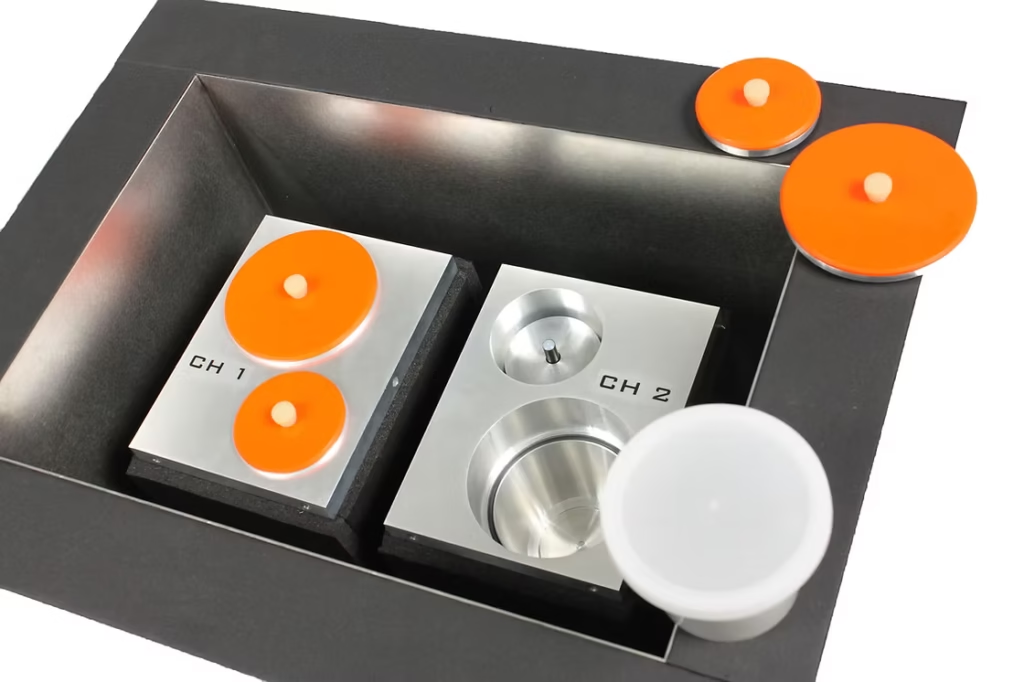
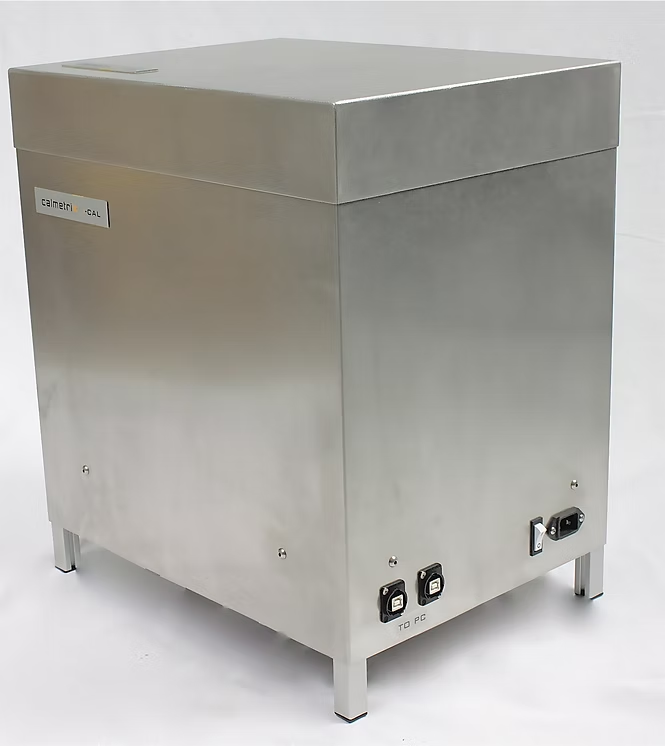
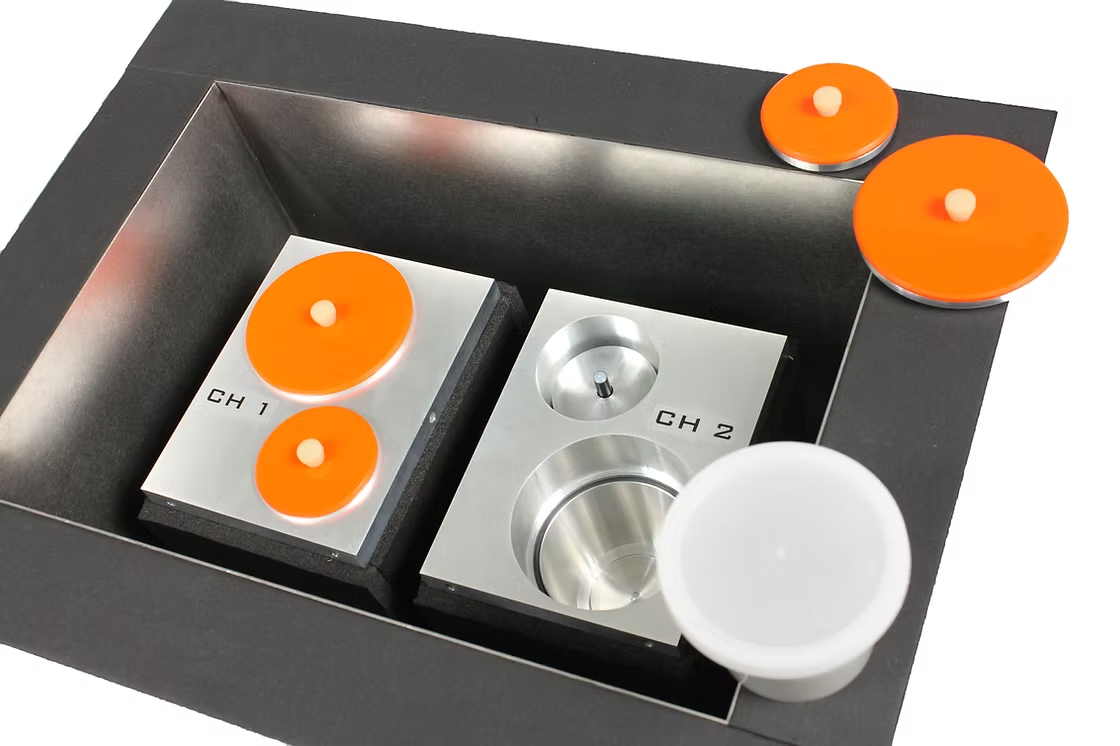
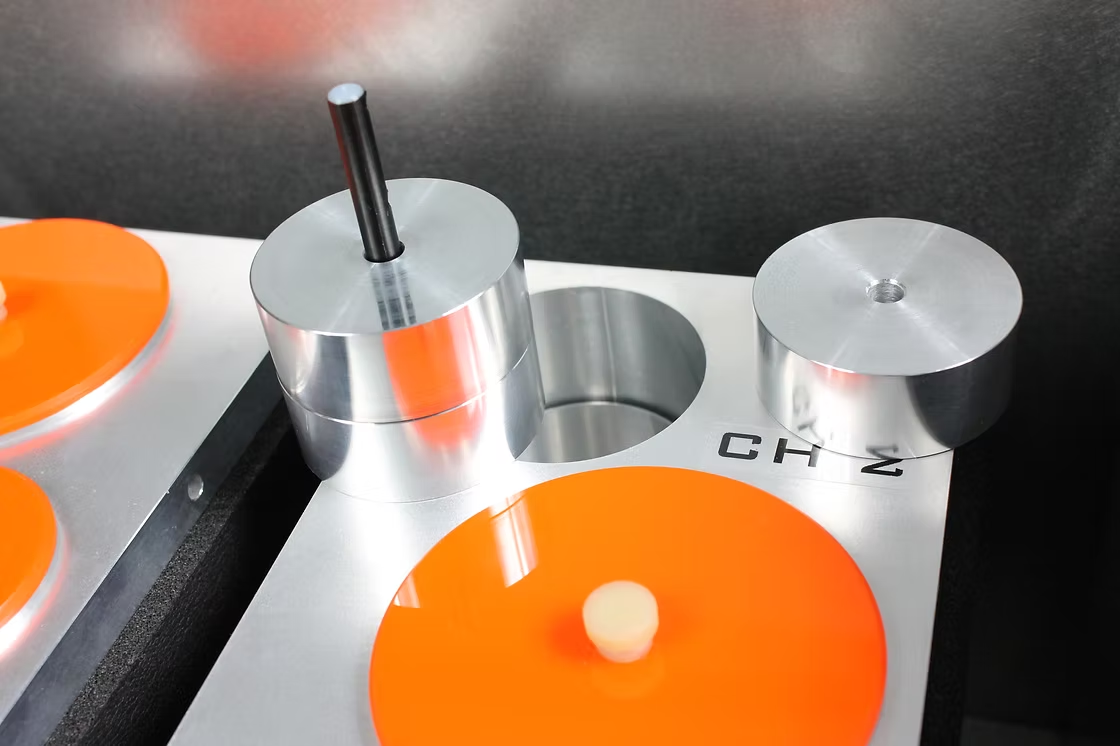
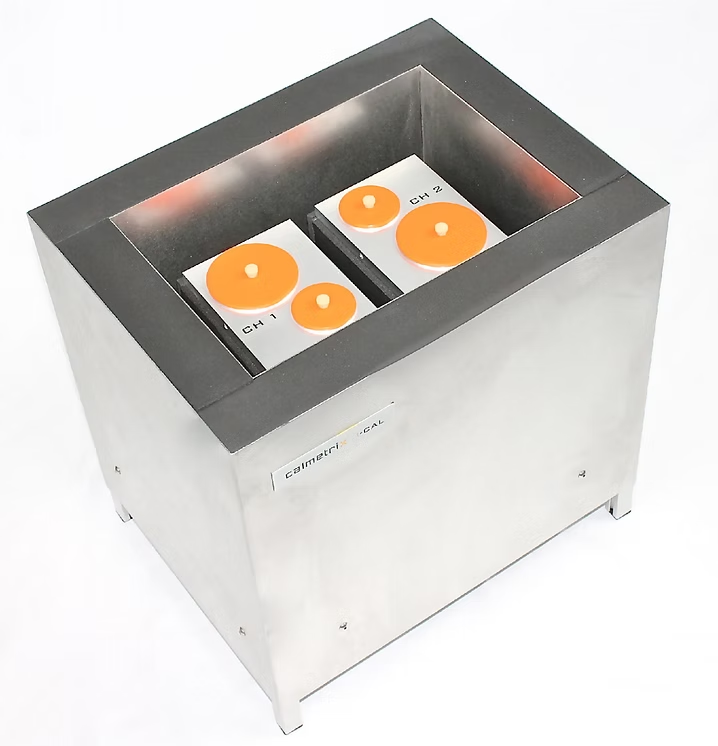
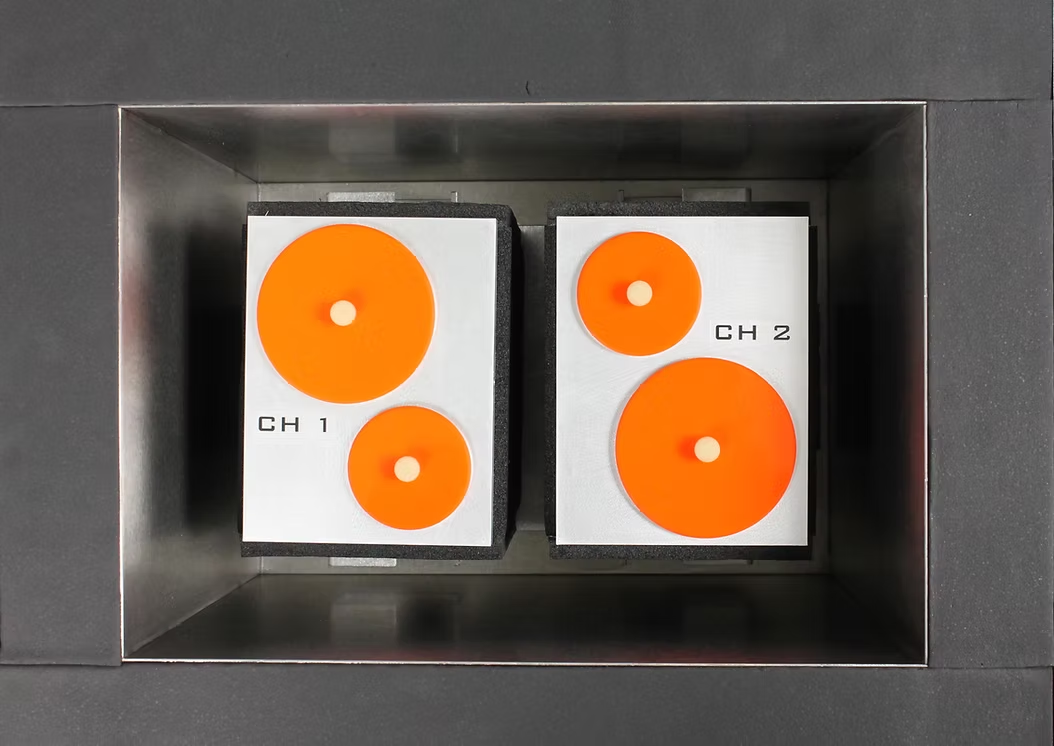
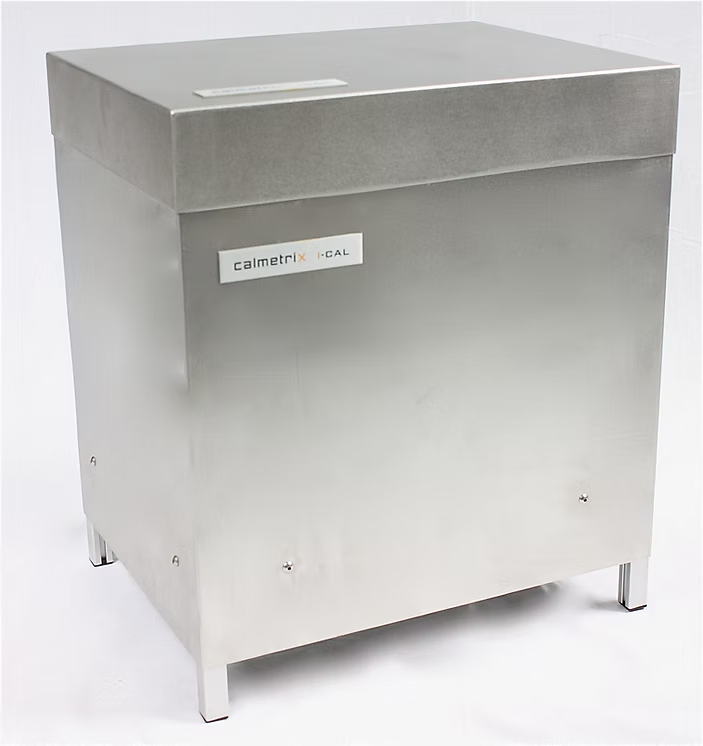
I-Cal 2000 HPC (“High Precision Calorimeter”) is a 2-channel Isothermal Calorimeter. Like all Calmetrix I-Cal isothermal calorimeter models, I-Cal 2000 HPC features a sample size of up to 125ml, which can be used for applications in multiple fields, including R&D and Investigative work on concrete properties as well as daily QC needs in Cement and Concrete production. Variable reference cells make I-Cal 2000 HPC a versatile equipment, making it possible to test cement, mortar and real concrete, or other materials of various types and sample sizes.
I-Cal 2000 HPC is suitable for long term testing of cement hydration up to 28 days or longer.
In addition, I-Cal 2000 HPC is fully compliant with ASTM C1679, ASTM C1702, ASTM C563ASTM C1897, RILEM R3 and EN 196-11.
Just like for other Calmetrix I-Cal calorimeters, the ambient temperature around the samples is computer-controlled by Calmetrix’s software interface, with precision sensors measuring the heat flow generated by the cement hydration reaction. But I-Cal 2000 HPC distinguishes itself by its clever design to minimize sensitivity to outside conditions. This means more consistent results, but also a robust performance even in a non-air conditioned environment, a definitive benefit in terms of reproducibility, and cost savings for field laboratories or rooms that are not tightly air-conditioned. Furthermore, I-Cal 2000 HPC’s two active sample cells are not in contact with each other, thereby keeping cross-talk below 0.1%.
Applications:
I-Cal 2000 HPC is well adapted for applications in R&D and Investigative work on cement and concrete properties, as well as daily QC needs in cement and concrete production. Typical uses are:
• heat of hydration measurement as per ASTM C1702
• detection of potential material incompatibility (between cement and admixtures, etc.)
• sulfate optimization
• sensitivity tests on variations in admixture or other material content
• estimation of compressive strength using heat of hydration curves
• determination of activation energy for thermal crack prediction
• sensitivity tests on temperature variations
• mix design optimization and statistical performance analysis
• test temperatures of more than 50 °C (up to 70 °C), e.g. for studies of delayed ettringite formation
• characterization of supplementary cementitious materials
When to consider an I-Cal 2000 HPC:
I-Cal 2000 HPC is the right isothermal calorimeter for experiments that have the following characteristics:
-
curing at any temperaure, and up to 70 °C when needed
-
test durations of any length, up to 28 days or even longer
-
Heat of hydration testing as per ASTM C1702
-
high precision studies with need for best signal/nose ratio (minimum cross-talk)
Software:
CalCommander software for Cement and Concrete calorimetry
The CalCommander software was designed for the needs of cement & concrete scientists and quality control professionals, giving them the means needs to innovate faster and streamline every day tasks by cutting back on traditional physical performance testing. CalCommander can be used to predict or model compressive strength gain and setting times, and even provide an optimum sulfate addition level, thereby saving time and costs associated with other testing methods.
CalCommander 2 for Isothermal calorimeters
Works with all Calmetrix I-Cal models (I-Cal, I-Cal HPC, I-Cal Flex and I-Cal Ultra)

Logger
Logger operates your calorimetry equipment. You can start/stop logging and capture relevant data for your experiment that will be stored along with the heat curve. I-Cal Logger logs and displays Power, Energy as absolute values, or by unit weight of cement or mass of cementitious material. You can also create interim reports while logging data.

AE “Activation Energy”
Activation energy is often used in maturity-based predictions to infer propensity of cracking or compressive strength gain. I-Cal AE determines the activation energy of a predominantly portland cement-based mix, or a high volume pozzolan mix, or even alkali-activated systems such as geopolymers.
I-Cal AE also draws the Arrhenius plot, which quickly characterizes the behavoir of a specific mix and its sensitivity to temperature variations.

Reports
Reports is used to retrieve curves from past experiments, zoom in on parts of the curve for more detailed analysis, create comprehensive reports or save graphs as images. Graphs can be shown as Power, Energy or Power and Energy normalized by unit weight of cement or cementitious material. You can also export data into a format compatible with spreadsheet applications such as Microsoft Excel or OpenOffice.

HoH
HoH is used to determine the exact value of heat of hydration of a cement or cementitious system. The user has the option to use input fields, calculationsa and reporting that are conveniently designed for use with ASTM C1702 and EN-196-11

Set
Set lets you infer setting times directly from calorimetry curves. Based on the proven “fractions” method, it is quick to set up and easy to use. Users can create correlation files for given mix designs to fine tune results. The software also providees a graphic representation of the window of finishability for each mix.

SO3
SO3 is an application that uses calorimetry curves for sulfate optimization of cement. It bases itself on ASTM C563, using heat of hydration as a proxy for compressive strength.
I-Cal SO3 makes continuous quality control for SO3 content incredibly easy for the cement plant, as it avoids labor intensive and costly compressive strength testing.

Strength
Strength can be used in two ways:
a. estimate compressive strength in the absence of any physical testing via a correlation between a given mix’s calorimetry curve and compressive strength values.
b. make physical compressive strength testing for a few curing ages and use the calorimetry curve to estimate strength at other curing ages. This helps to reduce the cost burden of physical testing.

R3 Reactivity
Whoever has done RILEM R3 / ASTM C1897 testing has come across many test results that tare off because of a changing baseline offset. This requires time consuming work for baseline adjustments in the data. The R3 Reactivity makes this correction an easy one-click exercise, saving hours of work and yielding nmore excat results

QC “Quality Control”
The QC software analyzes calorimetry curves by characterizing each curve through specific points (inflexion points, sulfate depletion point, max. peak, etc.). The software automatically finds these points and traces trendlines for repeat tests over time, making it easy to monitor the quality and consistency of a cment, cement blend, alternative binder or concrete.