Fully Integrated Electron Diffractometer
A system any X-ray crystallographer will find intuitive to operate
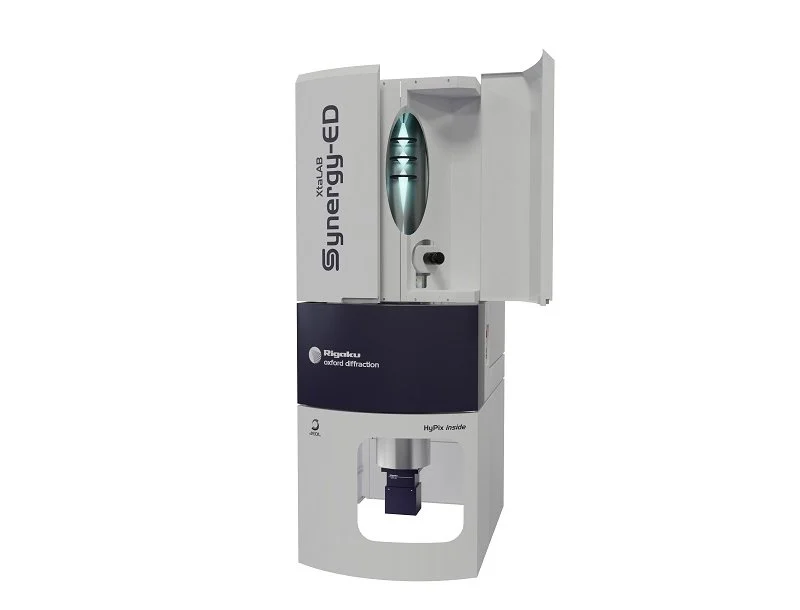
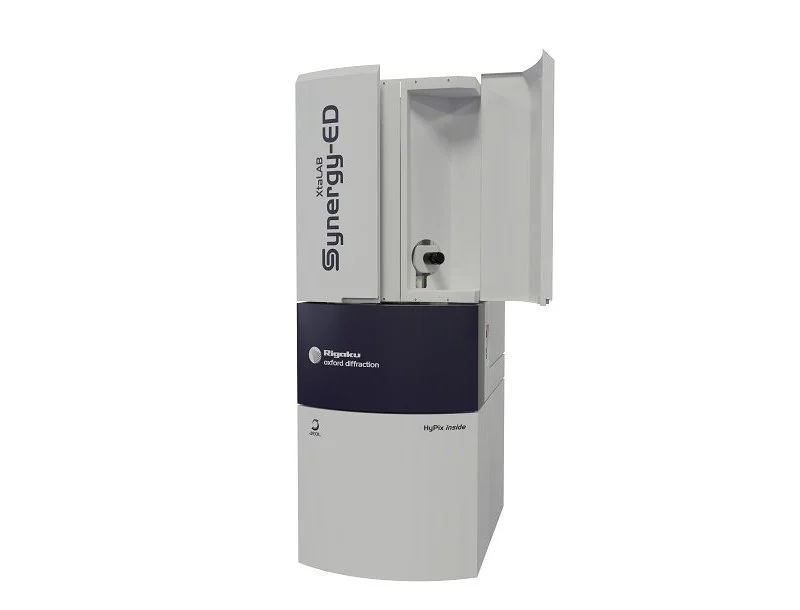
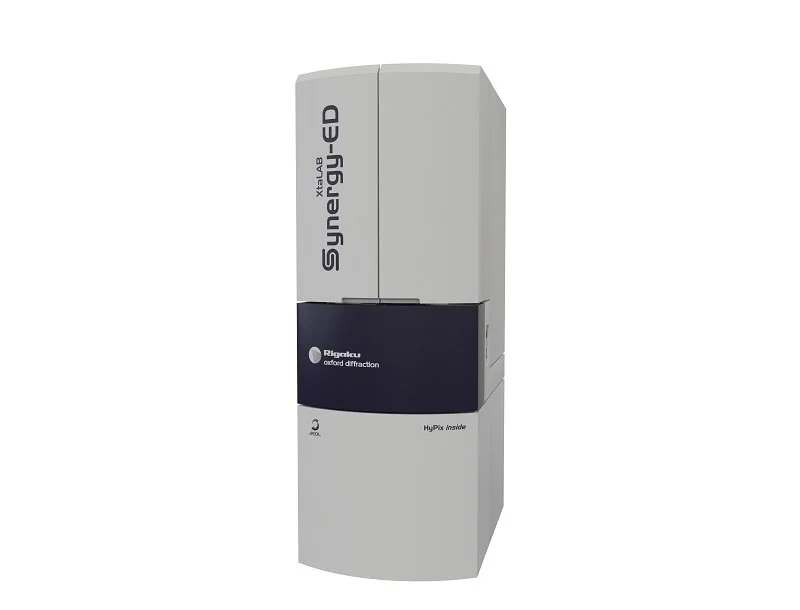
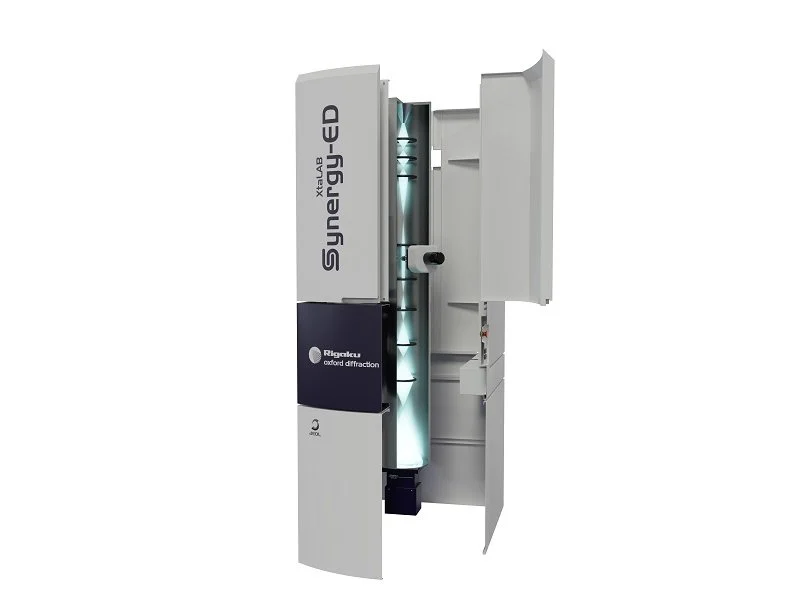
XtaLAB Synergy-ED is a new and fully integrated electron diffractometer, creating a seamless workflow from data collection to structure determination of three-dimensional molecular structures. The key feature of this product is that it provides researchers an integrated platform enabling easy access to electron crystallography. The XtaLAB Synergy-ED is a system any X-ray crystallographer will find intuitive to operate without having to become an expert in electron microscopy.
XtaLAB Synergy-ED Overview
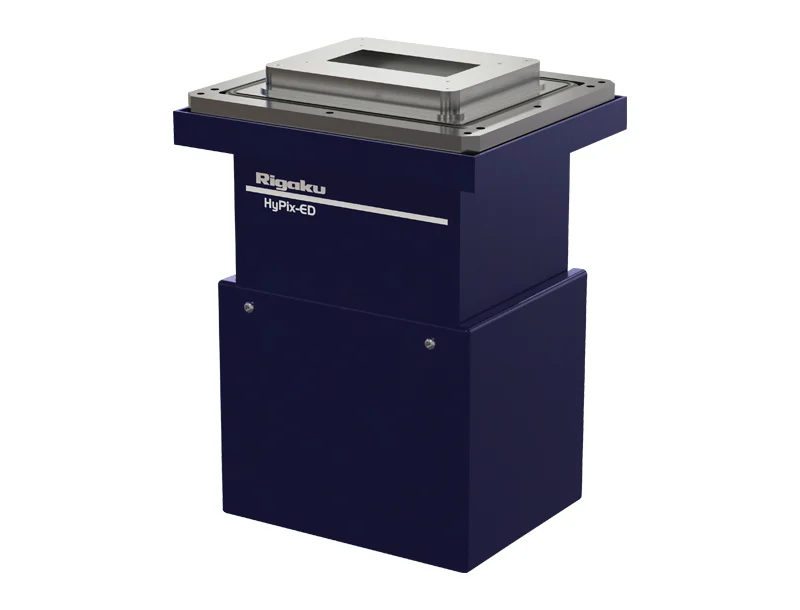
The XtaLAB Synergy-ED is the result of an innovative collaboration between Rigaku and JEOL, to synergistically combine our core technologies: Rigaku’s high-speed, high-sensitivity photon-counting detector (HyPix-ED) and state-of-the-art instrument control and single crystal analysis software platform (CrysAlisPro for ED), and JEOL’s long-term expertise and market leadership in designing and producing transmission electron microscopes.
Solve the unsolvable
Simply put, MicroED, also known as 3D ED, offers the chance to solve 3D structures from samples that are too small for X-ray diffraction. For X-ray crystallography, these samples would yield insufficient diffraction strength or quality to obtain a fully resolved structure.
When you are faced with a sample that is tricky to crystallize, MicroED can let you shortcut the difficult process of optimizing the crystallization conditions. Instead, the technique allows you to obtain 3D data and structure from powders, whether you have a lot or just a little. The only requirements are that you have crystalline material and that the grains are below 1 micron in size.
It doesn’t matter if you are studying pharmaceuticals, MOFs or any other materials. If you are struggling to grow crystals, the XtaLAB Synergy-ED may help you solve your unsolvable problems.
The value of dedicated instrumentation
The XtaLAB Synergy-ED is a dedicated electron diffractometer that is operated by the same CrysAlisPro control software used to run Rigaku’s X-ray diffractometers. Those who have used TEMs for diffraction experiments know the pain of sharing time with microscopists and/or configuring the hardware before and after use. XtaLAB Synergy-ED offers you a device specifically for diffraction so it is always calibrated and ready for diffraction and can even be installed alongside your X-ray instrumentation†. CrysAlisPro controls all aspects of the diffractometer, removing the need for specialist knowledge, so even if you’ve never used an electron diffractometer before, you’ll be solving structures in no time.
Powerful software
All of the powerful tools X-ray crystallographers have become accustomed to are available for XtaLAB Synergy-ED users as well. With CrysAlisPro-ED, you no longer need to chain together multiple pieces of software and figure out how to convert the data between each to get the job done. CrysAlisPro offers a seamless experience to get you all the way from selecting grains to measurement through to publishable data with one piece of software.
Through a partnership with FZU (the Institute of Physics of the Czech Academy of Sciences), Rigaku now provides access to Jana2020 with Dyngo (Palatinus et al Acta Cryst. (2015). A71, 235-244) for XtaLAB Synergy-ED users at no additional charge.
Jana2020 incorporates the pioneering implementation of dynamical refinement for 3D electron diffraction and has become one of the most widely adopted refinement packages in electron crystallography. Together with the existing Olex2 and AutoChem workflows available on XtaLAB Synergy-ED, users can select the refinement approach best suited to their application and scientific requirements.
This new availability extends advanced electron crystallography capabilities to commercial and industrial users without additional software licensing costs.
XtaLAB Synergy-ED Features
- Fully integrated electron diffractometer creating a seamless workflow from sample screening and data collection to structure determination of three-dimensional molecular structures
- Improve your ability to investigate nanocrystalline samples due to the ability of electron diffraction to measure crystals that are only a few hundred nanometers or less in size
- Collect data of unrivalled quality and success rate at high throughput, without the need for complex manual alignment and configuration as required on shared general-purpose electron microscopes optimized for imaging tasks
- Any X-ray crystallographer will find the XtaLAB Synergy-ED intuitive to operate, without having to become an expert in microscopy.
XtaLAB Synergy-ED Specifications
| Technique | 3D microcrystal electron diffraction (MicroED/3D ED) with continuous-rotation data collection | |
|---|---|---|
| Attributes | Dedicated electron diffractometer running CrysAlisPro-ED, a complete integrated software platform. Ultra-low-dose operation for sample screening and diffraction data collection. Optimized electron optics for versatile diffraction conditions without the need for regular alignment or calibration. Automation features for unattended data collection from hundreds of microcrystals | |
| Detector | High-speed, high-sensitivity hybrid pixel array detector, HyPix-ED. Variable detector distance via electron-optical projection system (10x range) | |
| Source | LaB₆ electron gun, electron energy up to 200 keV (λ = 0.0251 Å). Three-stage electron-optical condenser system | |
| Goniometer | Side-entry, single rotation axis with 160° total range | |
| Accessories | Cryo-transfer device, low-temperature, heating, gas-cell, and inert-transfer sample holders. Elemental analysis (EDS/EDX) | |
| Computer | External PC, MS Windows OS | |
Electron Diffraction
With X-ray crystallography, the smallest possible crystal dimension is 1 micron, and only then when utilizing the brightest X-ray sources and noise‑free detectors. However, in recent years, there has been an increasing need for the structure analysis of substances that only form microcrystals, crystals that are only a few hundred nanometers or less in size.
A new analytical method, MicroED, has been developed that uses electron diffraction to measure 3D molecular structures from nanocrystalline materials. Electron diffraction provides researchers with the ability to perform single crystal diffraction on samples smaller than those at the limit of X-ray diffraction. However electrons interact very strongly with matter, imposing an upper limit on the size of samples that can be studied. MicroED also presents experimental challenges that are different than X-ray crystallography, which is why the two techniques complement one another to provide structural scientists with enhanced capability.