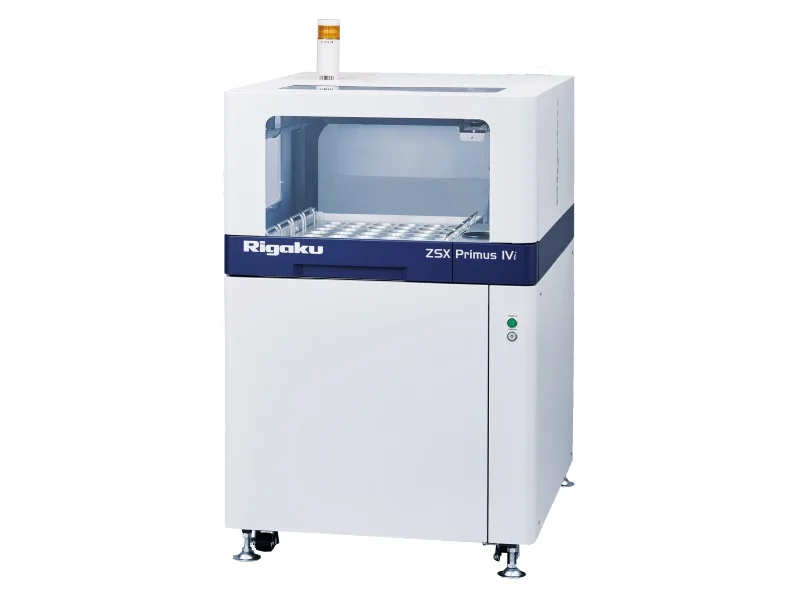
Tube-Below Sequential Wavelength Dispersive X-ray Fluorescence Spectrometer
Uncompromised X-ray analysis of liquids, alloys, and plated metals
The tube-below high-performance model enables uncompromised analysis of samples such as liquids, alloys, and plated metals. Providing superior performance with the flexibility for analyzing the most complex samples, the ZSX Primus IV𝒾 WDXRF spectrometer features a 30 micron Be tube window, the thinnest standard tube window in the industry, for exceptional light element (low-Z) detection limits.
ZSX Primus IV𝒾 Overview
Vacuum (partition) system for analyzing liquids
Because the spectrometer chamber is always under vacuum, the change from vacuum atmosphere to helium atmosphere is completed in less than two minutes. Furthermore, the consumption of helium gas is significantly reduced compared to models where the spectrometer chamber must also be purged.
Improved throughput
Improved mechanics minimize the analysis dead time. For example, a 16-element sequential quantitative measurement time improved from 348 seconds to 287 seconds, representing an 18% increase in efficiency.
D-MCA high-speed analysis
The Digital Multi-Channel Analyzer (D-MCA) system facilitates high-speed digital processing for high count rates for improved analytical precision and increased throughput speeds.
Optical system not easily impacted by sample surface height variations
An uneven sample surface causes variations in the distance between the sample and the X-ray tube. These differences can lead to changes in the X-ray intensity. Rigaku optical systems enable suppression of X-ray intensity changes caused by variation in distance. This enables accurate analysis by minimizing the impact of shape differences from fusion molds used in glass bead formulation and the impact of uneven sample surfaces during pressing of powder samples.
Point/mapping analysis
Equipped with a high-resolution camera that allows the user to zoom in on small features for proper identification and analysis. Enables accurate analysis by eliminating differences in sensitivity caused by measurement placement. Superior design uses the hot-spot of the tube to maximize intensity/sensitivity.
Refined SQX analysis
SQX analysis is standardless FP analysis software for calculation of accurate elemental composition. Now easier to use than ever.
Automated center wire cleaning mechanism
The F-PC detector center wire gradually becomes contaminated by proportional counter quench gas, which diminishes resolution. The center wire cleaning mechanism enables restoration of performance by eliminating center wire contamination by means of electrical heating, with no need to shut off the power source or to open the cabinet.
Nitrogen or Helium Flush mechanism
Nitrogen gas can now be used as the atmospheric gas in place of helium. When nitrogen gas is used, the SQX analysis range is 15P to 96Cm. When measuring in nitrogen atmosphere, the standard option “SQX scattering FP method” is not applicable.
ZSX Primus IV𝒾 Features
- Assisted measurement and analysis support: ZSX Guidance Automated analysis settings features enhanced third-generation SQX analysis software
- ZSX Guidance software Built-in XRF expertise handles sophisticated settings. Available application packages enable turn-key operations
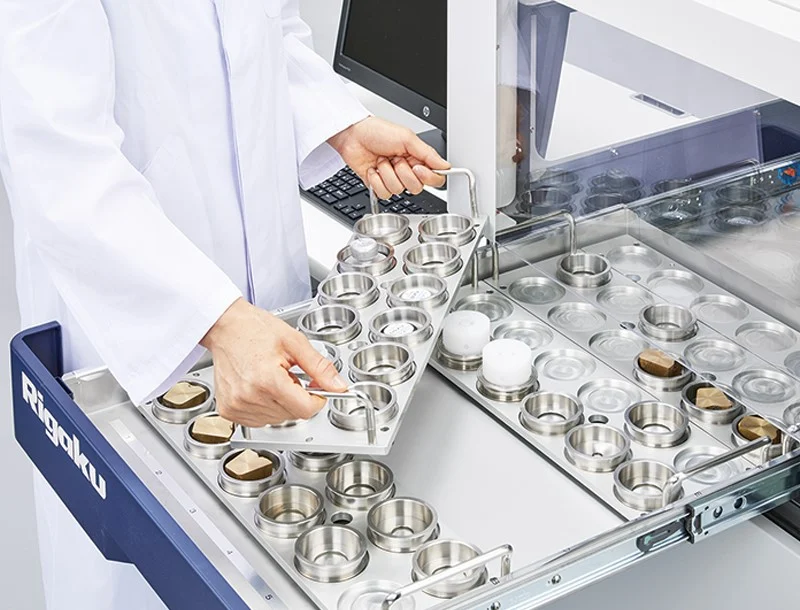
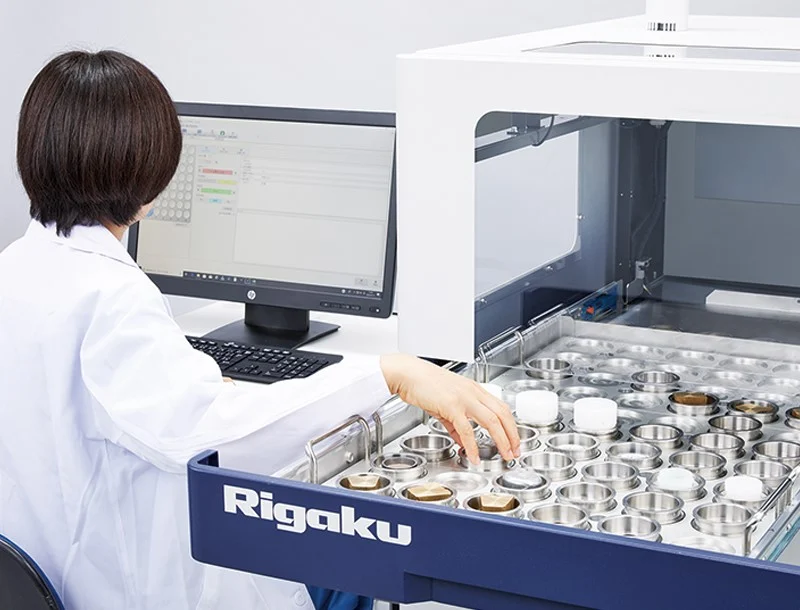
- Intuitive software programmable for everyday analysis using sample trays Sample ID settings for each tray (facilitates easy copy-and-paste for efficient measurement setup)
- Improved accuracy of liquid sample analysis Correction of geometry effect caused by geometry of liquid sample cups
- High-speed, high-precision measurements Efficiency of the new drive sequence decreases instrument overhead time
- Unique functionality The tube-below optics enables convenient functionality, including new sample film corrections
ZSX Primus IV𝒾 Specifications
| Technique | Wavelength dispersive X-ray fluorescence spectrometer (WDXRF) | |
|---|---|---|
| Benefit | Elemental analysis of solids, liquids, powders, alloys and thin films | |
| Technology | Tube-below sequential WDXRF | |
| Attributes | End window type Rh target 4 or 3 kW, 54-position autosampler, analyze Be to Cm, vacuum | |
| Options | He-flush Additional analyzing crystals r-θ stage/mapping |
|
| Computer | External PC, MS Windows OS, ZSX software | |
| Dimensions | 840 (W) x 1440 (H) x 980 (D) mm | |
| Mass | Approx. 600 kg (core unit) | |
| Power requirements | 3-phase 200/208 V 40 A 50/60 Hz | |