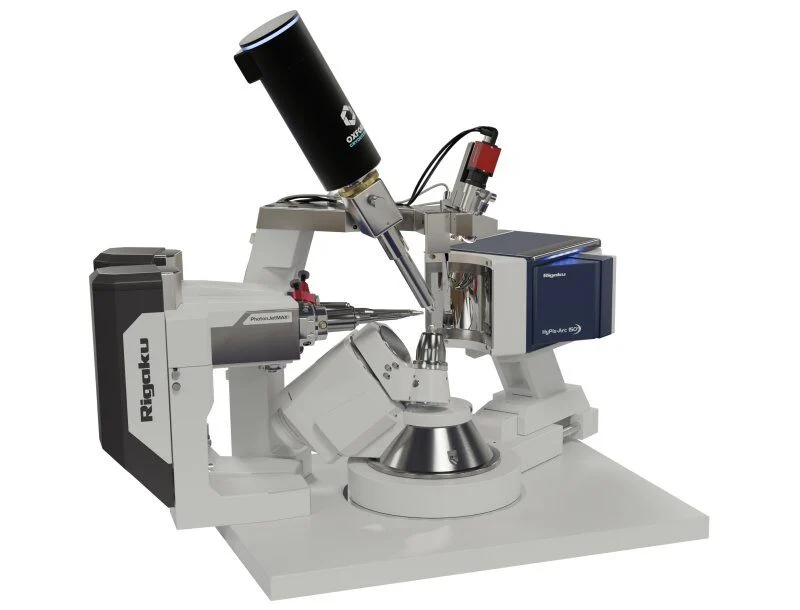
XtaLAB Synergy-S
Single Or Dual Microfocus X‑ray Diffractometer For All Your Crystallography Needs
A fast and agile single crystal X‑ray diffractometer for small molecule 3D structure analysis
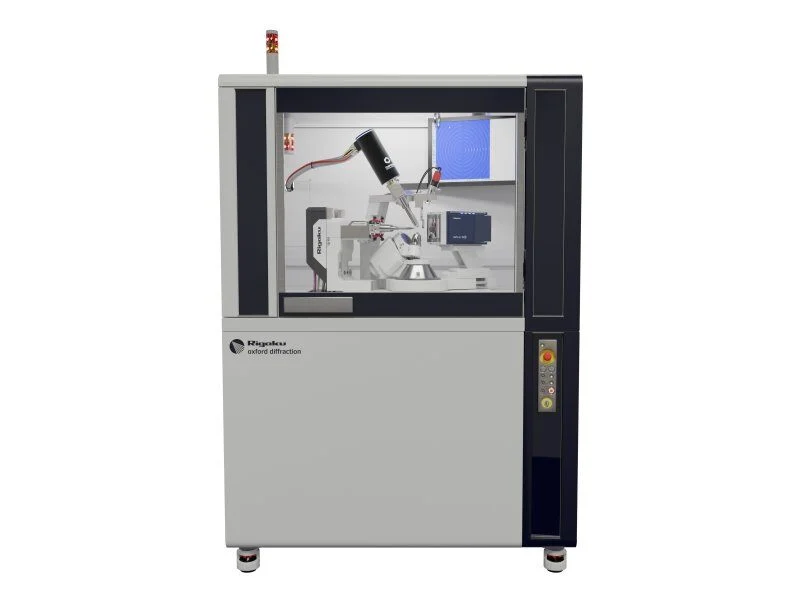
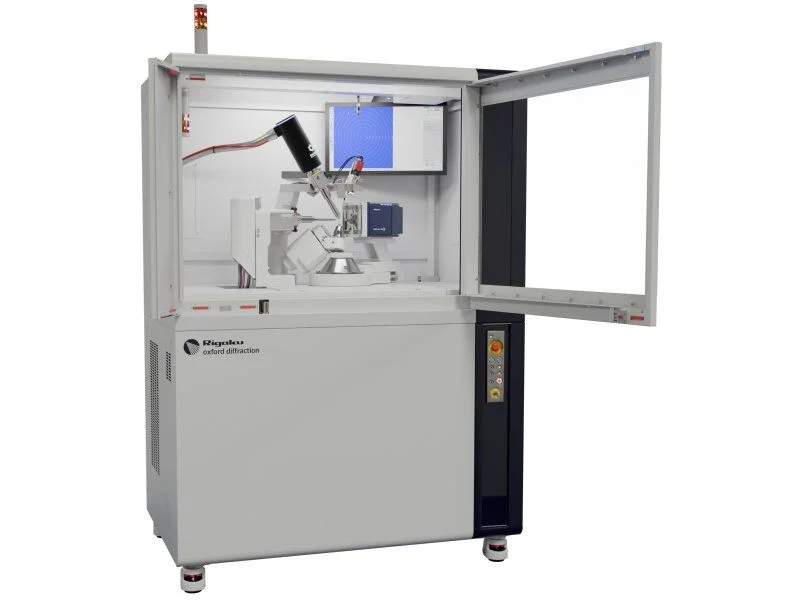
With your success utmost in our minds, we have developed the XtaLAB Synergy-S X-ray diffractometer for single crystal X-ray diffraction. Using a combination of leading-edge components and user-inspired software tied together through a highly parallelized architecture, the XtaLAB Synergy-S produces fast, accurate data in an intelligent fashion.
XtaLAB Synergy-S Overview
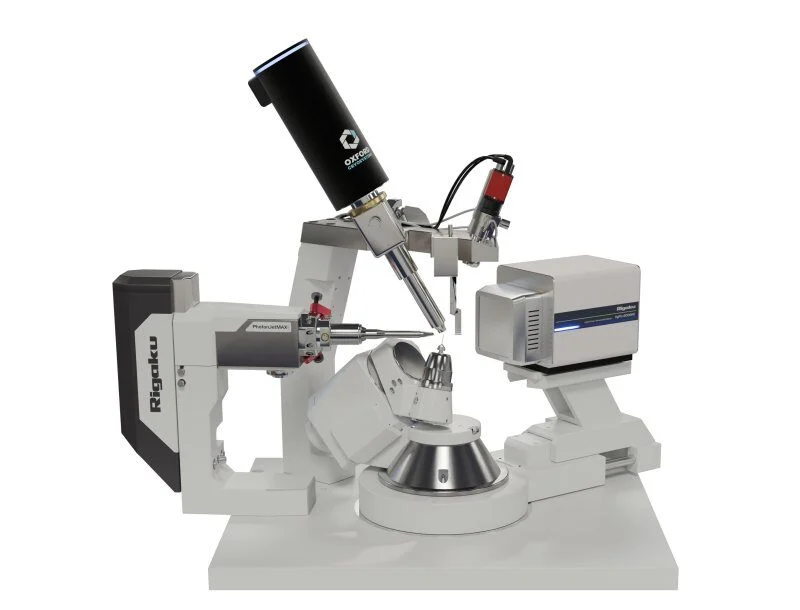
The system is based around the PhotonJet-S series of microfocus X-ray sources that optionally incorporate continuously variable divergence slits. These third-generation sources have been designed to maximize X-ray photons at the sample by using a combination of new optics, new longer-life tubes and an improved alignment system. PhotonJet-S sources are available in Cu, Mo or Ag wavelengths in either a single or dual source configuration. The XtaLAB Synergy-S single crystal X-ray diffractometer comes with a kappa goniometer that incorporates fast motor speeds and a unique telescopic two-theta arm to provide total flexibility for your diffraction experiment. The system is also equipped with your choice of HPC hybrid photon counting detectors, the HyPix-6000HE or the large theta coverage detectors: HyPix-Arc 100° or HyPix-Arc 150°.
In some settings, there is a desire to share instrument resources across different research groups. The XtaLAB Synergy-S in a dual-source configuration is the perfect system to be shared between protein crystallographers and chemical crystallographers: a Mo source will give the chemical crystallographers the wavelength necessary to reduce absorption from heavier elements and a Cu source, with optional continuously variable divergence slits, will give the protein crystallographer the functionality necessary to resolve large unit cells.
The XtaLAB Synergy-S now comes equipped with our new UG3 goniometer, which offers faster, more efficient data collections. For more information about the UG3, please see the overview page.
HyPix Detectors
Rigaku’s own HyPix family of detectors use solid state pixel array technology to enable direct X-ray photon detection and counting. Direct X-ray photon detection means that X-ray photons are counted instantaneously as they arrive at the detector. There is no conversion to visible light by a scintillator so the energy of the photon can be assessed at moment of detection. This leads to essentially noise free images. The HyPix detectors feature a 100 Hz frame rate which allows for data fine slicing even at the fastest goniometer speeds. The HyPix detectors incorporate dual counters enabling several modes of operation. Rapid alternating counter electronics (RACE) technology enables the 100 Hz zero dead time mode, ensures that no pixel is blind for more than a few nanoseconds during exposure to X-rays. The high dynamic range mode combines the counters to offer a massive 31-bit counter depth. Dual thresholding offers differential modes and selective signal suppression.
PhotonJet-S
The XtaLAB Synergy-S is defined by its new PhotonJet-S X-ray source. The PhotonJet-S sources provide almost double the flux for all three target types (Mo, Cu, Ag) compared to the previous generation. For the best data quality, it is important to ensure any source provides highly reproducible flux frame after frame. As tube temperature changes, so does the X-ray flux reaching your sample. Controlling the temperature of our sources using closed-circuit water cooling offers the best solution for both consistent and high performance and reliability in a completely standalone package.
PhotonJetMAX-S
The XtaLAB Synergy-S can now be equipped with our new PhotonJetMAX-S high-performance microfocus sealed tube sources. These sources offer double the performance without increasing operating costs. For more information view the product page.
Beam Conditioning
Where overlapping peaks are a concern, e.g. large unit cells, proteins, twinned or incommensurate, high beam divergence is undesirable. On PhotonJet sources, a software controlled, motorized variable beam slit is available as an option to alter divergence to adapt the source to your sample’s requirements. For those samples where intensity matters most, the slit can be fully opened giving the highest flux. For those where peak sharpness and overlap are factors, the beam can be limited to a divergence anywhere between 1 to 10 mrad.
CrysAlisPro
The XtaLAB Synergy-S comes complete with CrysAlisPro, our user-inspired data collection and data processing software for single crystal analysis. Designed around an easy-to-use graphical user interface, CrysAlisPro can be operated under fully automatic, semi-automatic or manual control. CrysAlisPro combines automated crystal screening, the fastest and most accurate strategy software available, concurrent data reduction and automatic small molecule structure solution. Visual feedback is provided for each step with clear, color-coded guidance so that both novices and experts can collect high-quality data in the shortest time possible.
CrysAlisPro can be operated in either a protein or small molecule dedicated workflow. Popular third-party protein data processing packages can easily process diffraction data if desired.
AutoChem
AutoChem is the ultimate productivity tool for small molecule chemists, offering fast, fully automatic structure solution and refinement during data collection. Developed in collaboration with OlexSys Ltd (Durham University, UK), AutoChem works in conjunction with Olex² where more advanced structure solution and refinement functionality exists. AutoChem is seamlessly integrated within CrysAlisPro and forms an integral part of our ‘What is this?’ feature. The ‘What is this?’ feature gives you structures quickly and ensures you are not wasting time collecting full datasets on known samples or starting materials. It is an alternative pre-experiment option, which is used to plan your full data collections.
XtaLAB Synergy-S Features
- Fast, accurate data collection due to high-speed kappa goniometer, high-flux X-ray source, fast, low-noise X-ray detector, and highly optimized instrument control software
- Enhanced experimental versatility when the dual-source option is selected from three possible wavelengths (Mo, Cu, or Ag)
- Highest level of user safety with multiply redundant electromechanical safety circuits built into the ergonomically designed radiation enclosure
- Minimize your downtime by utilizing built-in online diagnostics and troubleshooting to diagnose and fix almost all problems without a site visit
- Automatically solve structures and determine what your sample is in a few seconds before committing to a full dataset by using the “What is this?” feature
- Optimize data collection speed when you select the optional HyPix-Arc 100° or HyPix-Arc 150° curved detectors, which allow theta coverage exceeding the largest detectors while still offering the highest-performing detection technology
- Enhance your ability to resolve large unit cells, twins or incommensurate lattices when you select the optional motorized variable beam slit in order to alter divergence to adapt the source to your sample’s requirements
- Improve your ability to investigate small samples because the solid state pixel array technology of the HyPix X-ray detectors means that X-ray photons are counted instantaneously as they arrive at the detector. There is no conversion to visible light by a scintillator so the energy of the photon can be assessed at moment of detection leading to essentially noise free images. And noise-free images means you can count longer for weakly diffracting crystals without a loss in data quality arising from detector noise
XtaLAB Synergy-S Specifications
| Core attributes | Single or dual microfocus sealed tube X-ray source diffractometer with hybrid pixel array detector and kappa goniometer | |
|---|---|---|
| Detectors | HyPix-6000HE or optionally the large theta coverage detectors HyPix-Arc 100° or HyPix-Arc 150° | |
| X-ray source | PhotonJet-S X-ray source with new microfocus sealed tube that incorporates a new mirror design and new alignment hardware. Three target types are available (Mo, Cu, Ag) | |
| Goniometer | Fast kappa geometry goniometer that allows data collection scan speeds of up to 10°/sec | |
| Accessories | Oxford Cryostream 1000, Oxford Cobra, XtaLAB Synergy FLOW robotic system, XtalCheck-S, High Pressure Kit | |
| Computer | External PC, MS Windows OS | |
| Core dimensions | 1300 (W) x 1875 (H) x 850 (D) mm | |
| Mass | 550 kg (core unit) | |
| Power requirements | 1Ø, 90-130V 15A or 180-260V 4A | |